A broadsword
All subject photos
Museum: Feldman Family Museum
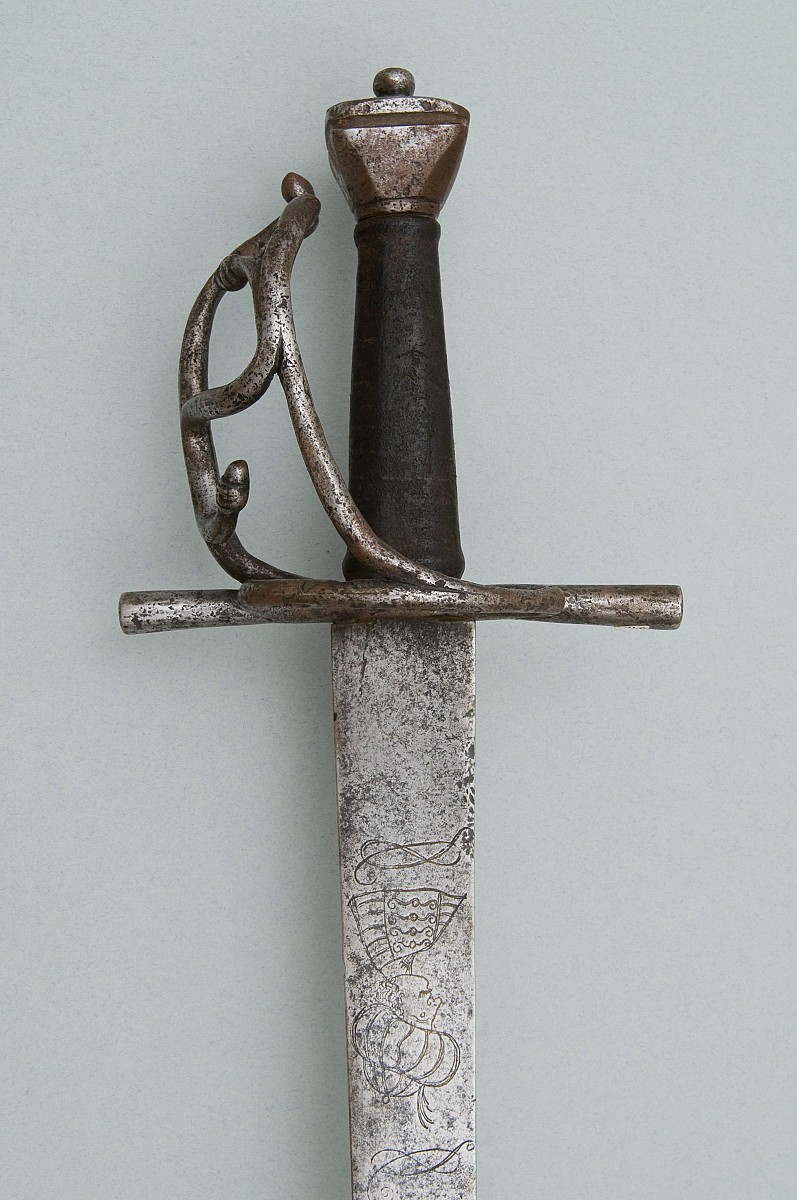
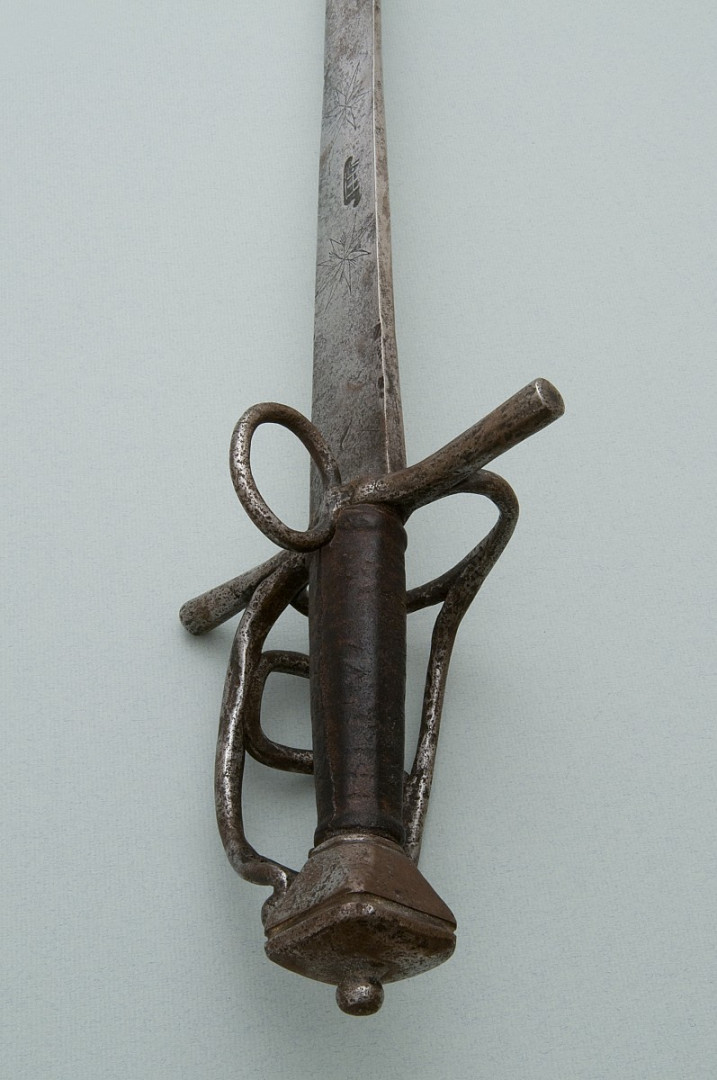
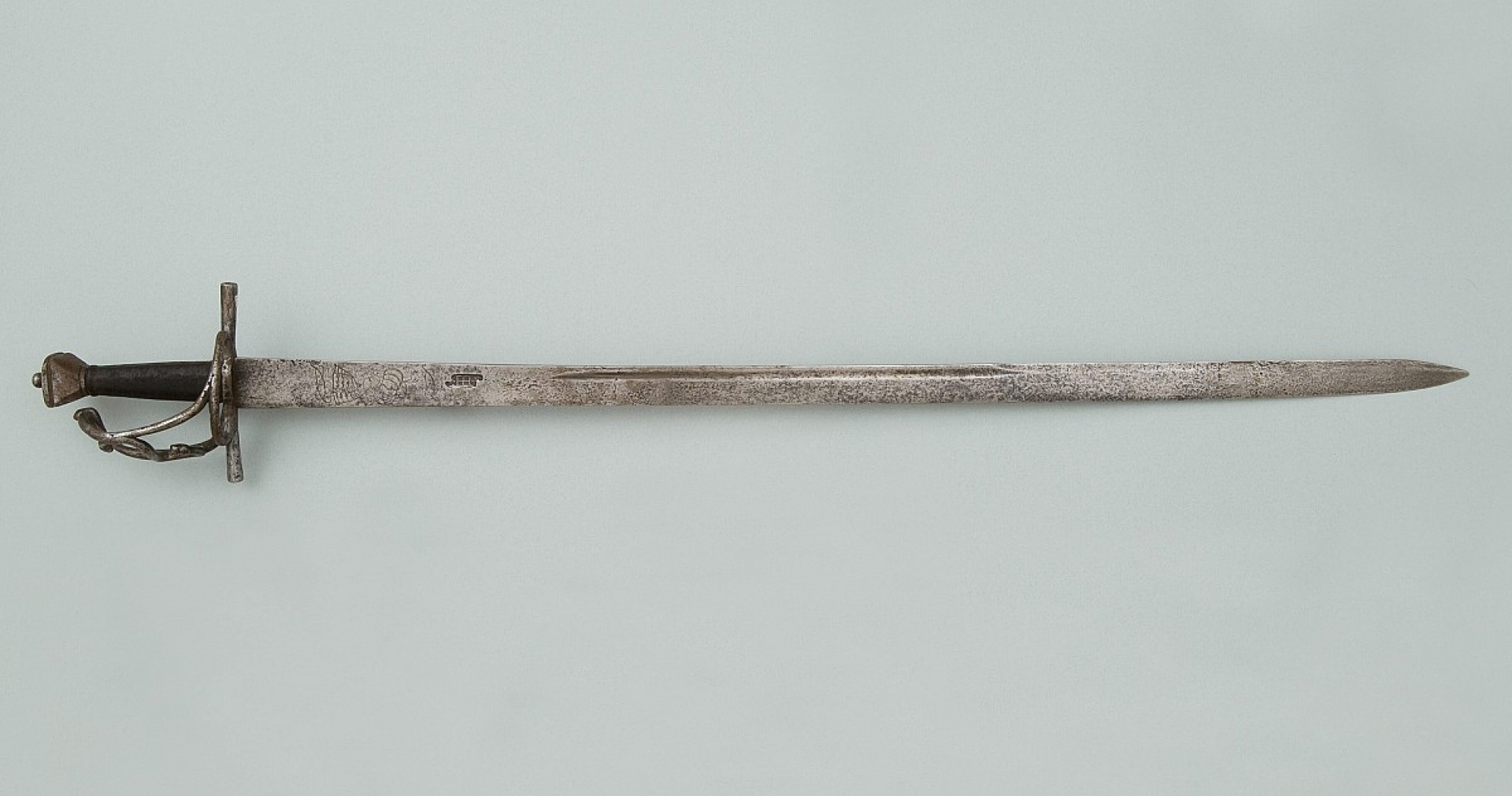
The straight single-edged blade is made of plain steel with one narrow fuller along the back in the middle part. In the lower third, the blade is double-edged. The point is located on the midline of the blade. In the upper part of the blade, on the right side, there is an engraved bust image of a man in a turban, on the left side there are two engraved eight-pointed stars. In addition, the maker's mark in the form of a lattice with two dots is stamped on both sides of the upper part of the blade. The hilt consists of a grip and a steel guard. The faceted grip is covered with leather. The massive faceted pommel expands upward. There is a button on the top of the pommel. The guard is formed by a straight cross-guard, a front bow, a lateral bow on the outside and a thumb ring on the inside. The lateral and front bows are connected by an S-shaped bridge with thickened ends. No scabbard.
COMMENT. The presented item is a European broadsword (palash) dated to the second half of the 17th century. Unfortunately, it is not possible to find out more precisely the place of manufacture and use of the sword, but it can be assumed that it was used in Central or even in Eastern Europe. This assumption is supported by the image of a Turk in a turban on a blade. Such images were quite typical for edged weapons of Central and Eastern Europe in the 17th century, especially in the second half of it, when the states of this region were seriously threatened by the Ottoman Empire. Permanent combat clashes with Turkish troops could not but affect the development of edged weapons in these countries and, of course, the style of the decoration of the blades. The broadsword is of great historical and cultural value as a rather rare example of the 17th century Central European long-bladed edged weapons.