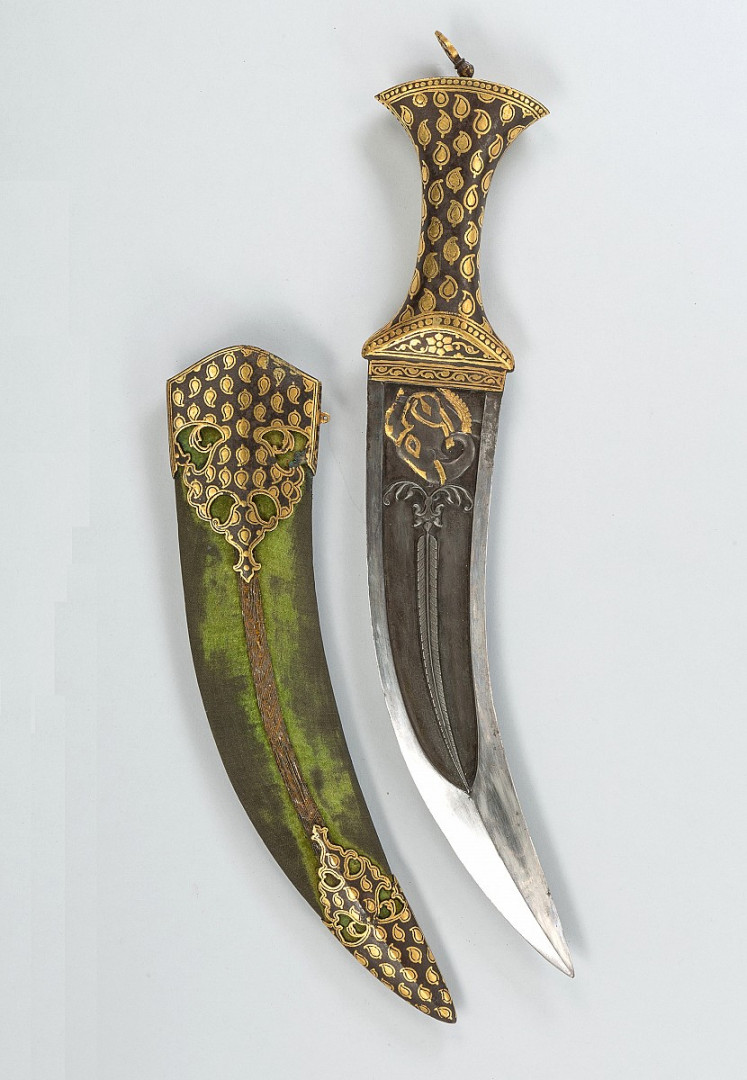
A Bundian style jambiya dagger
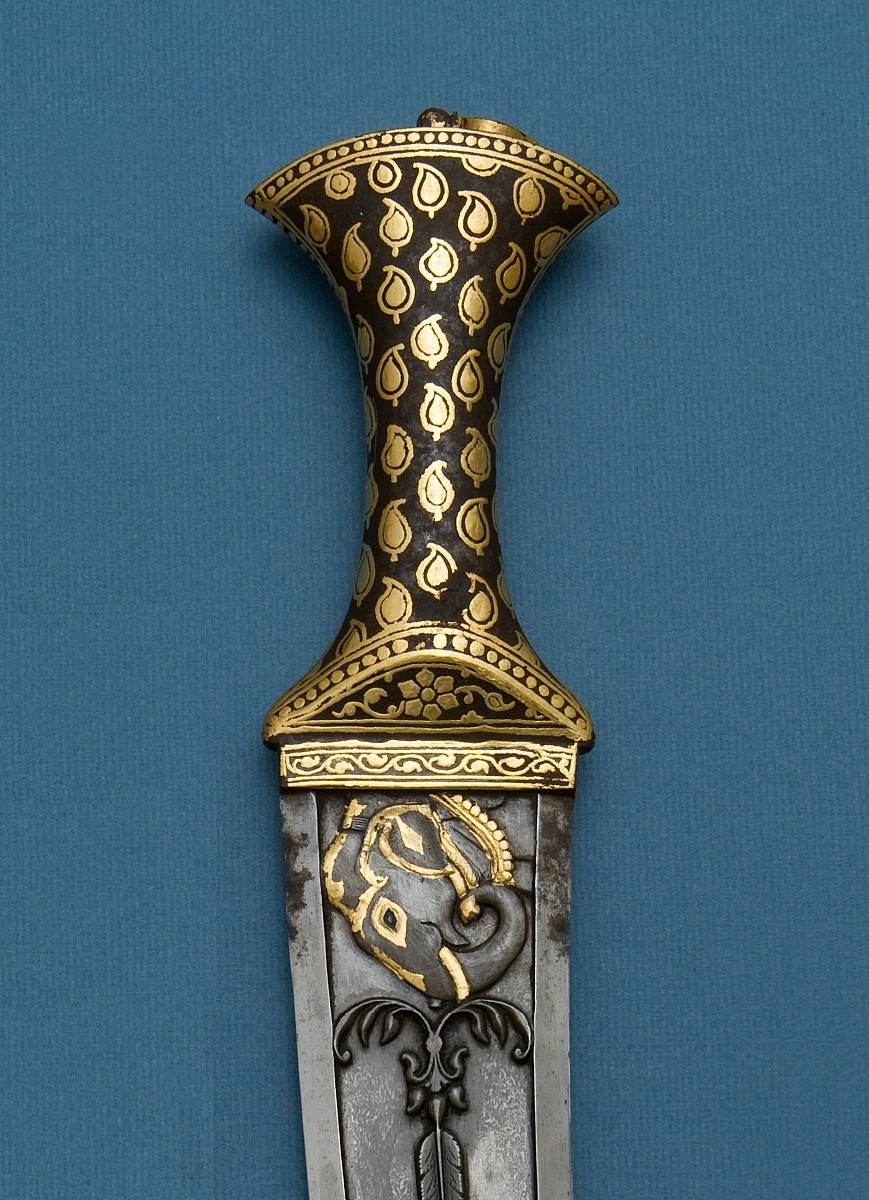
All subject photos
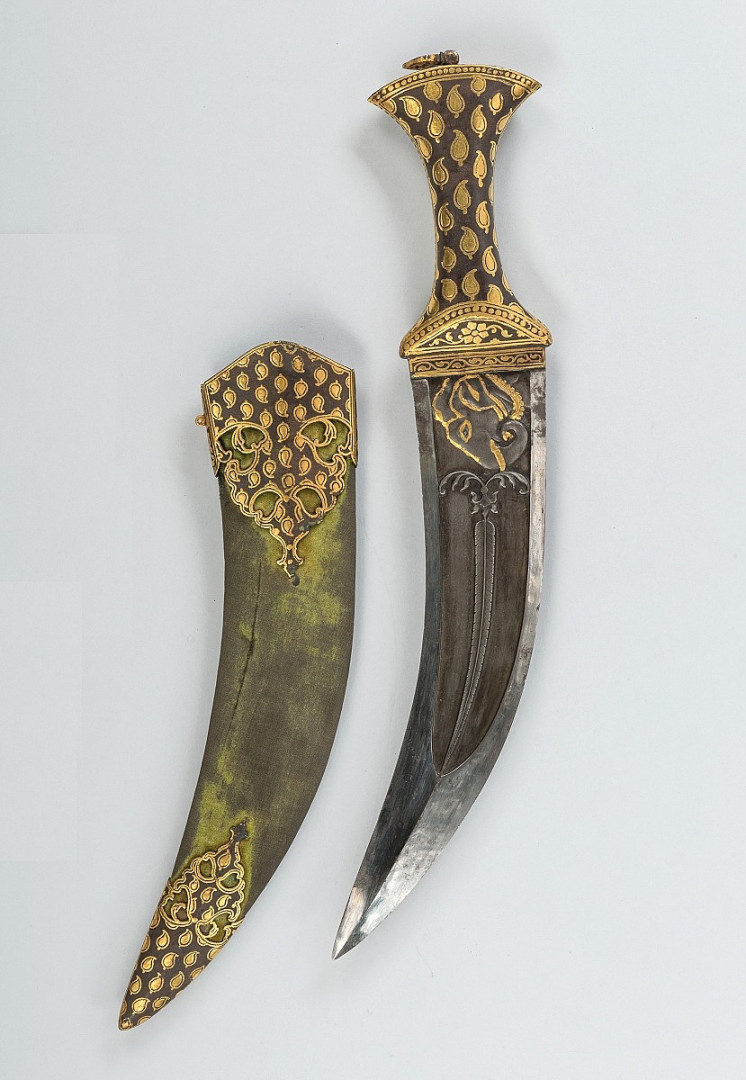
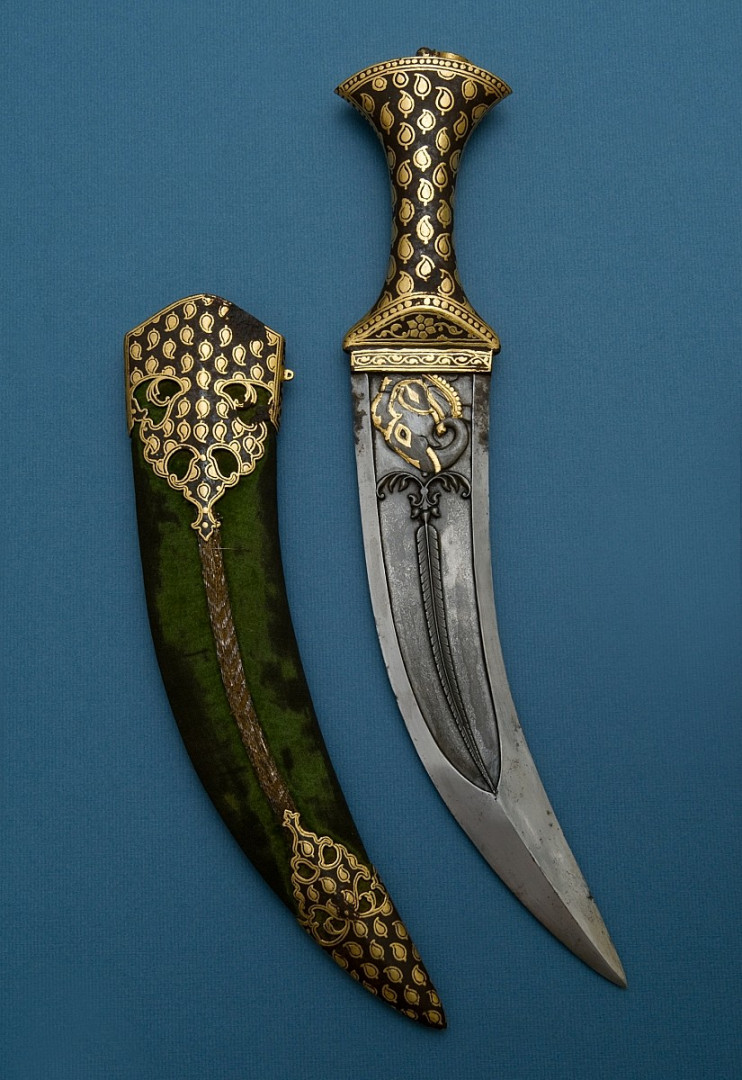
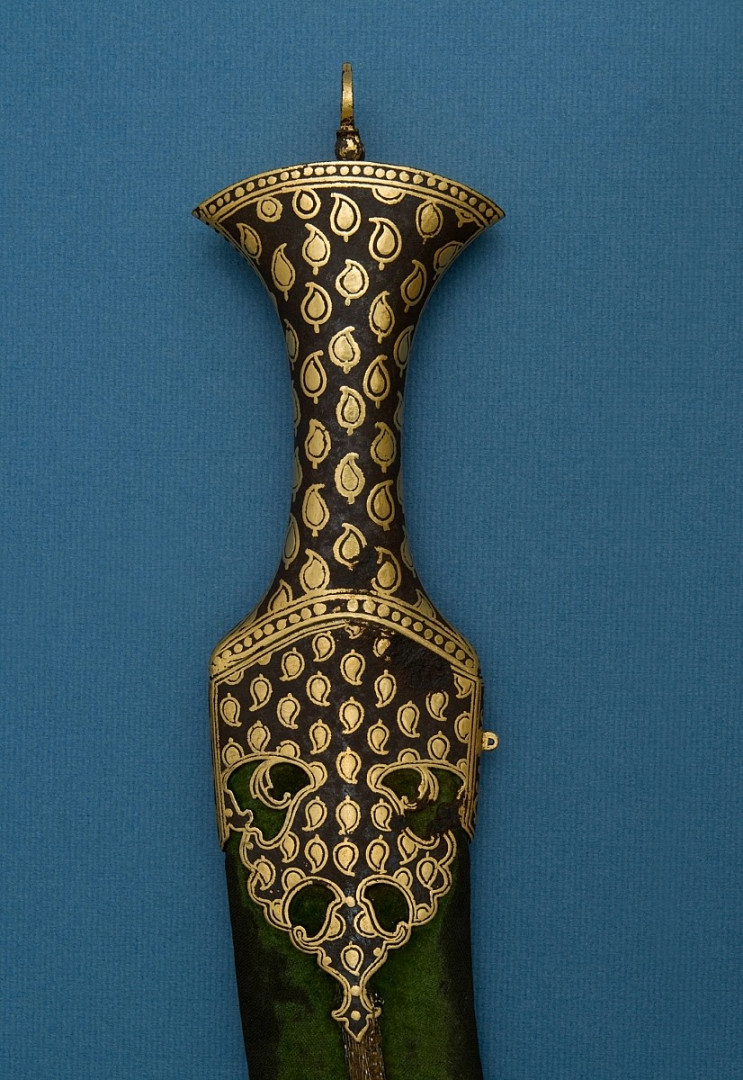
Museum: Feldman Family Museum
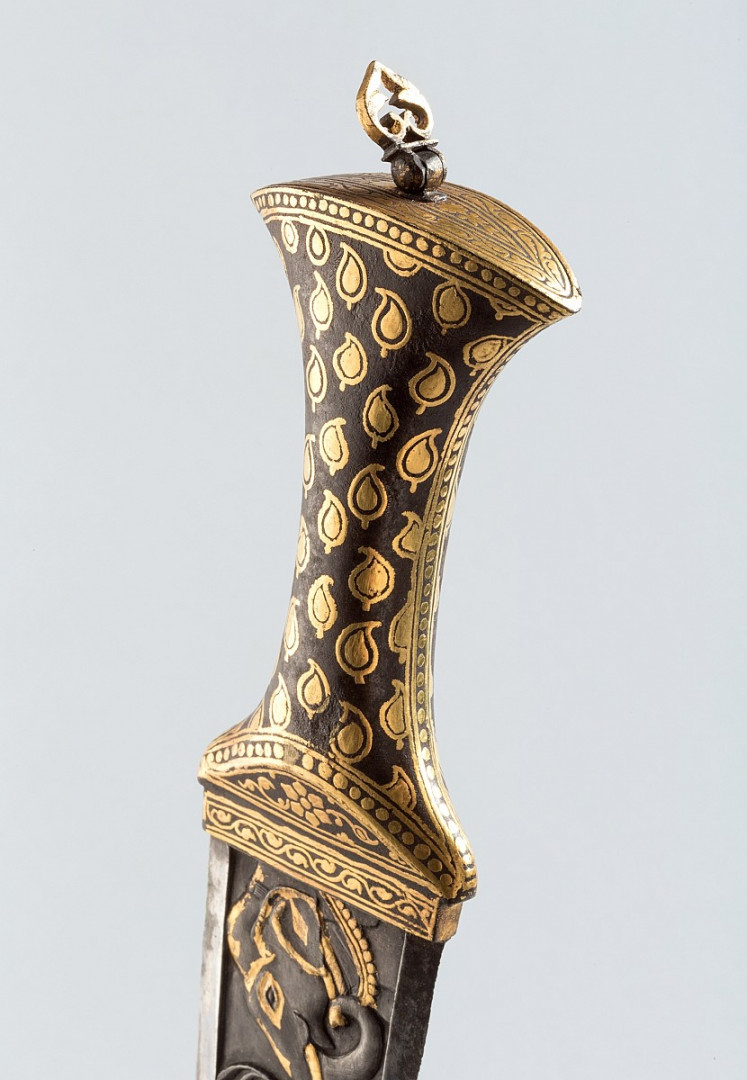
The curved, double-edged blade is made of watered steel with a reinforced tip and a single broad fuller on each side. In addition, each side of the blade is chiseled in relief with an elephant's head, a stylized cypress tree and an iris flower within fuller. The contours of the elephant's head are highlighted with gold koftgari. The waisted iron hilt is ornamented in the same technique with a repetitive leaf-like motif against a blackened ground. The pommel is fitted with a hanging openwork loop. The wooden scabbard covered with dark green velvet, which is partly worn and faded. The pierced iron scabbard mounts are decorated en suite with the hilt.
COMMENT. Jambiya is the traditional Arab dagger with a waisted hilt and a relatively short but broad, curved, double-edged blade, which generally has a raised central rib on each side. The shapes of the pommel and scabbard vary depending on local traditions. The word "jambiya" derives from the Arabic jamb / janb meaning "side", although the dagger is traditionally worn in a scabbard attached to a belt or tucked into a belt in front of the body. The alternative spelling is janbiya, as well as janbiyya or janbia. The term "jambiya / janbiya" is most commonly used in the western parts of the Arabian Peninsula, mainly Yemen and Western Saudi Arabia, whereas in eastern parts of the Arabian Peninsula including Oman, the United Arab Emirates, as well as some areas of Saudi Arabia (Al-Hasa) and Yemen (Hadhramaut), this dagger type is referred to as khanjar. In addition, the term "jambiya / janbiya" is common in India, where the Arab dagger came with merchants and mercenaries from Hadhramaut. Both the Arab jambiya and its local variations were popular here. Judging by some features of the form and decor, the presented dagger was made in the city of Bundi, located in the northwestern India, in the present-day state of Rajasthan.
LITERATURE: 1) Сіваченко Є. Холодна зброя Сходу з колекції Олександра Фельдмана: [фотоальбом]. – Харків, 2009. – С. 37; 2) Сіваченко Є. Холодна зброя Індії XVII-XIX століть із збірки Музею приватних колекцій Олександра Фельдмана: [каталог виставки]. – Харків, 2011. – С. 27; 3) Сиваченко Е. Сталь и Золото: Восточное оружие из собрания Feldman Family Museum = Steel and Gold: Eastern Weapons from the Feldman Family Museum Collection. – Киев, 2019. – С. 484-485, №196.