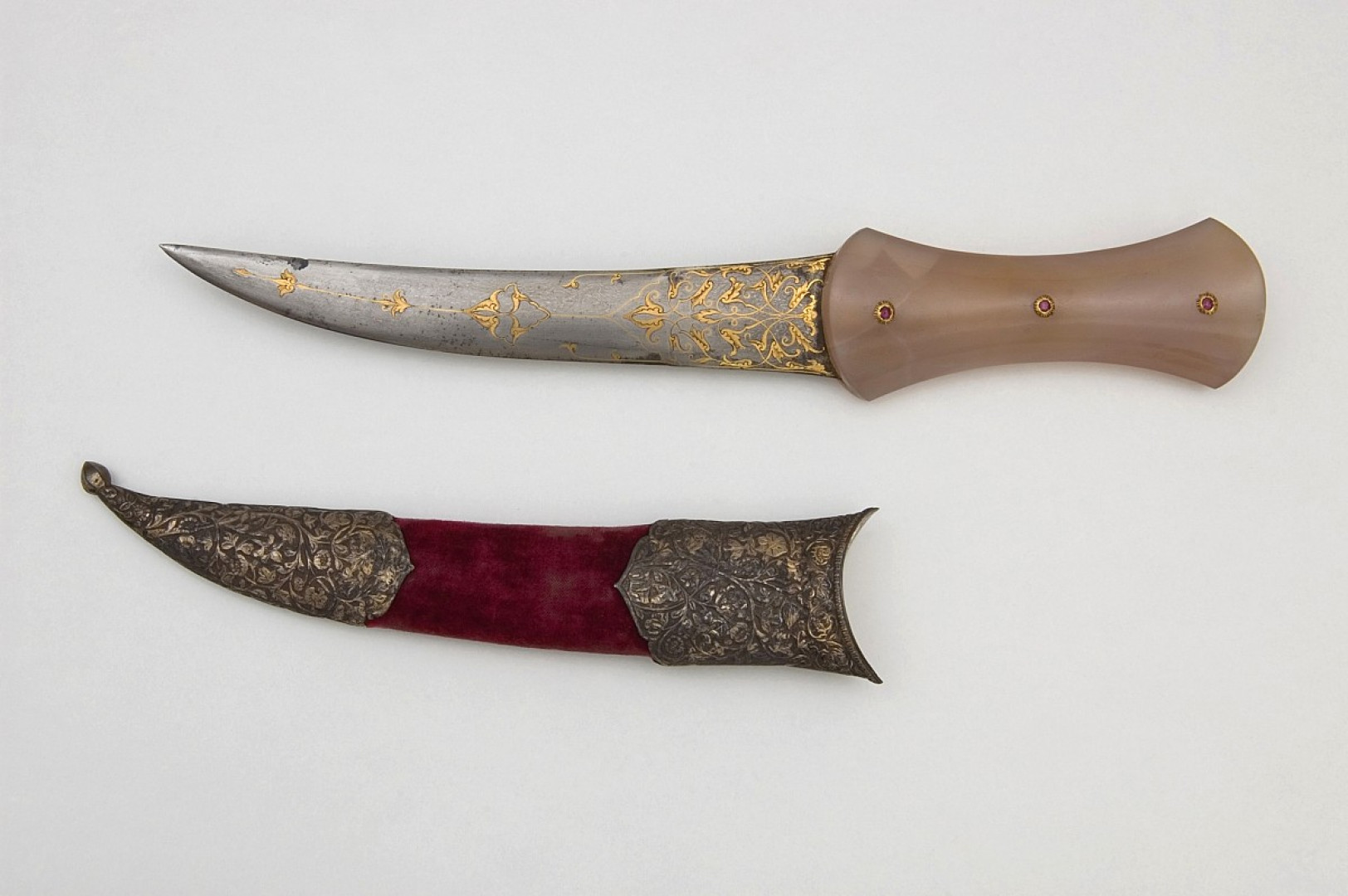
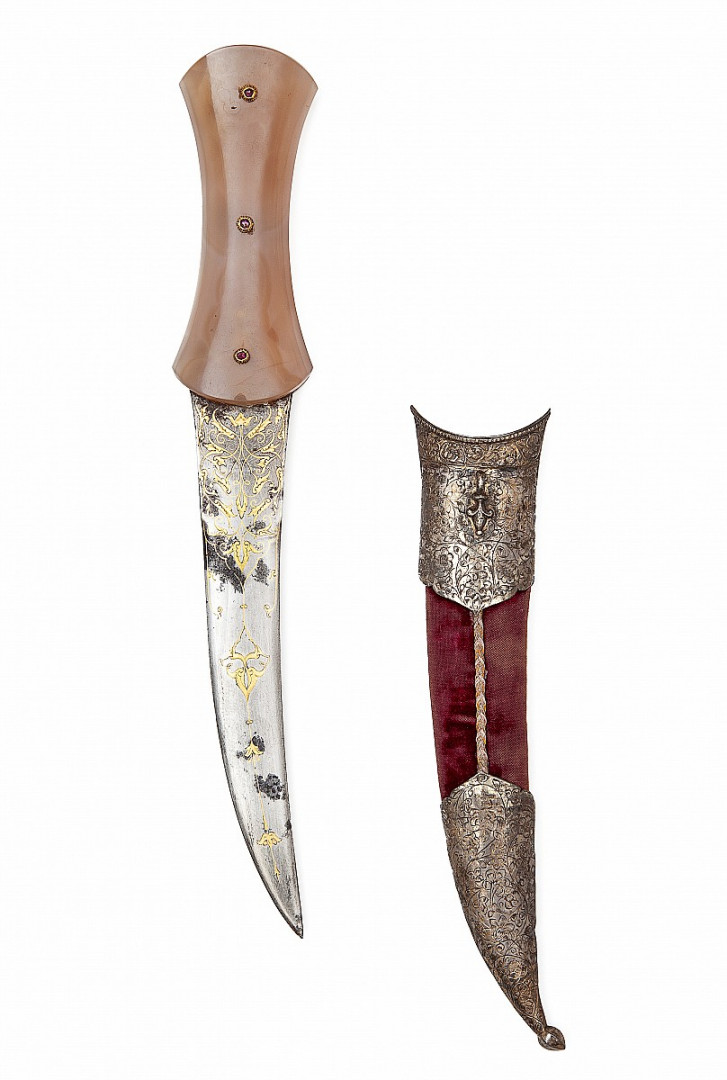
A chalcedony-hilted khanjar dagger
All subject photos
Museum: Feldman Family Museum
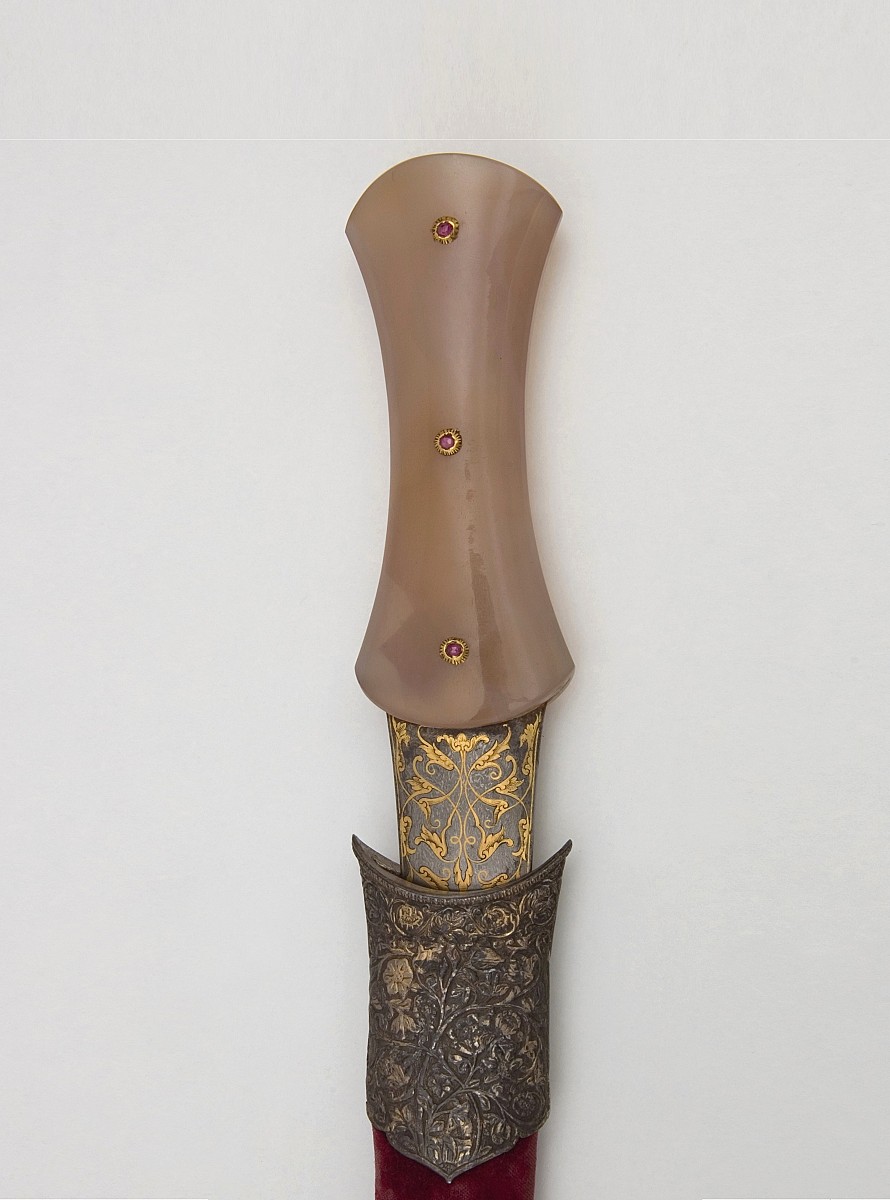
The slightly curved, double-edged blade of lenticular cross-section is made of watered steel and inlaid with a gold symmetrical arabesque design (rumi) on each side. The waisted hilt is carved from one solid piece of grayish-pink chalcedony and is decorated on each side with three small cabochon rubies set in gold bezel mounts. The hilt ends are rounded. The wooden scabbard is covered with dark red velvet. The parcel-gilt silver scabbard mounts are repoussed with flowers and foliage. The scabbard chape terminates in a stylized bud.
COMMENT. Khanjar is the general term, which is applied to different variations of a dagger with a waisted hilt and a curved, double-edged blade in the Islamic world, except for some western areas of Saudi Arabia, Yemen and India. The Arabic term khanjar is widely common in the region, where there are also related local names for such daggers, including the Turkish hançer, the Kurdish xençer, the Azerbaijani xäncär, the Bosnian handžar, and the Tajik xander. In Oman, the United Arab Emirates, as well as in some areas of Saudi Arabia (Al-Hasa) and Yemen (Hadramaut), the word khanjar is used for a traditional curved dagger, which is also commonly known as jambiya.
LITERATURE: 1) Косарєв Р.В., Нефедов В.В., Рівкін К. Зброя доби козацтва: Каталог історичних артефактів XV-XVIII ст. в 650 світлинах. – Київ, 2017. – С. 155; 2) Сиваченко Е. Сталь и Золото: Восточное оружие из собрания Feldman Family Museum = Steel and Gold: Eastern Weapons from the Feldman Family Museum Collection. – Киев, 2019. – С. 186-187, №55.