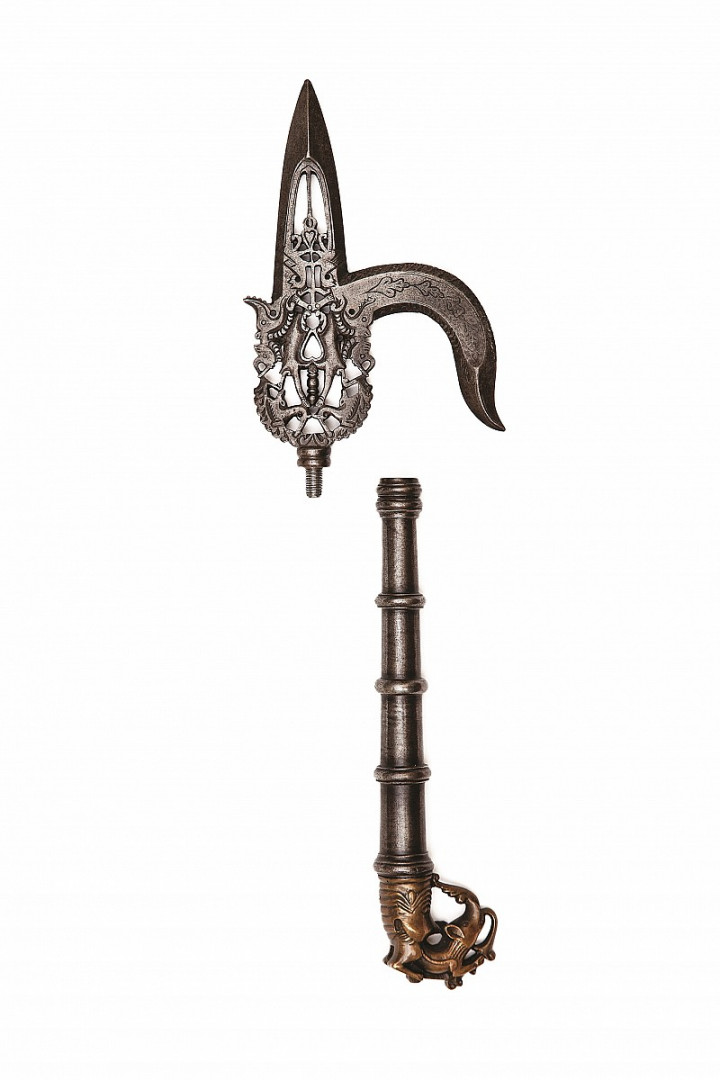
A dismountable steel ankus
All subject photos
Museum: Feldman Family Museum
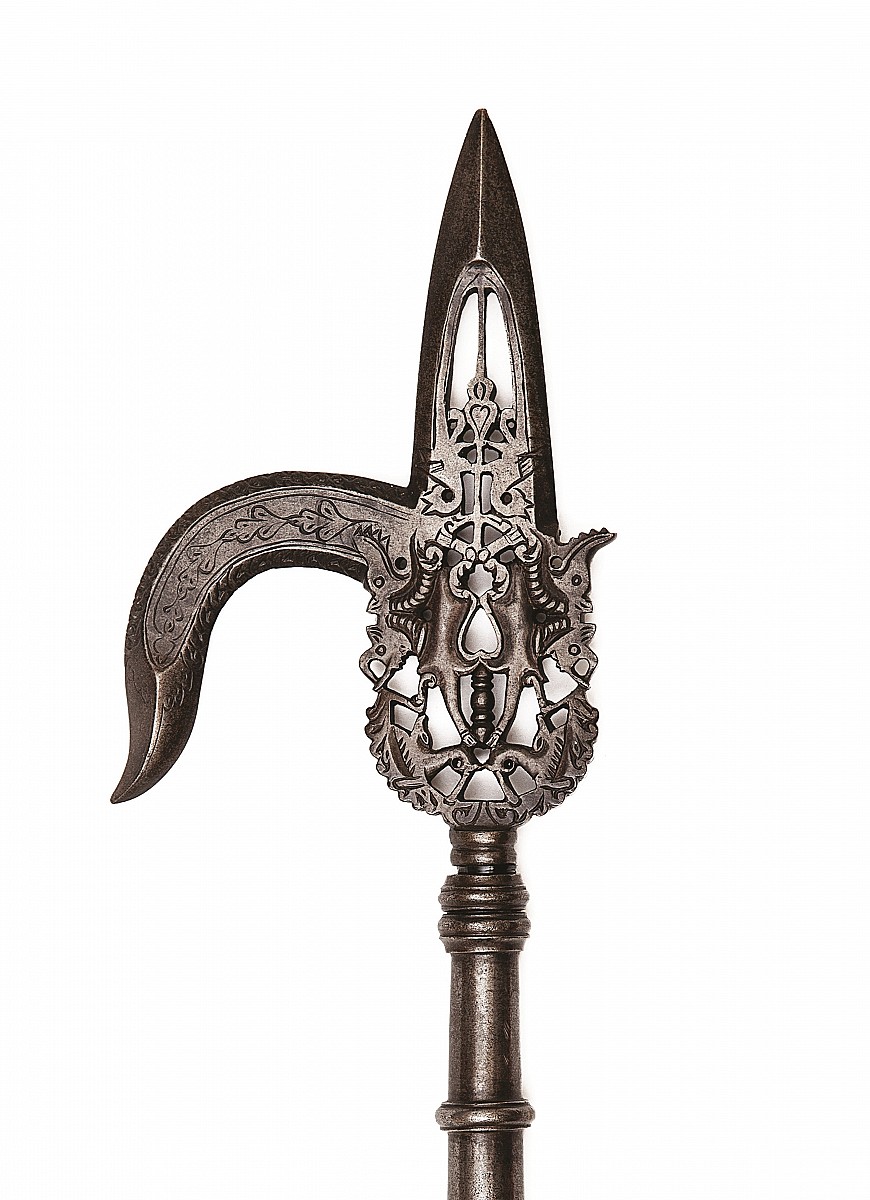
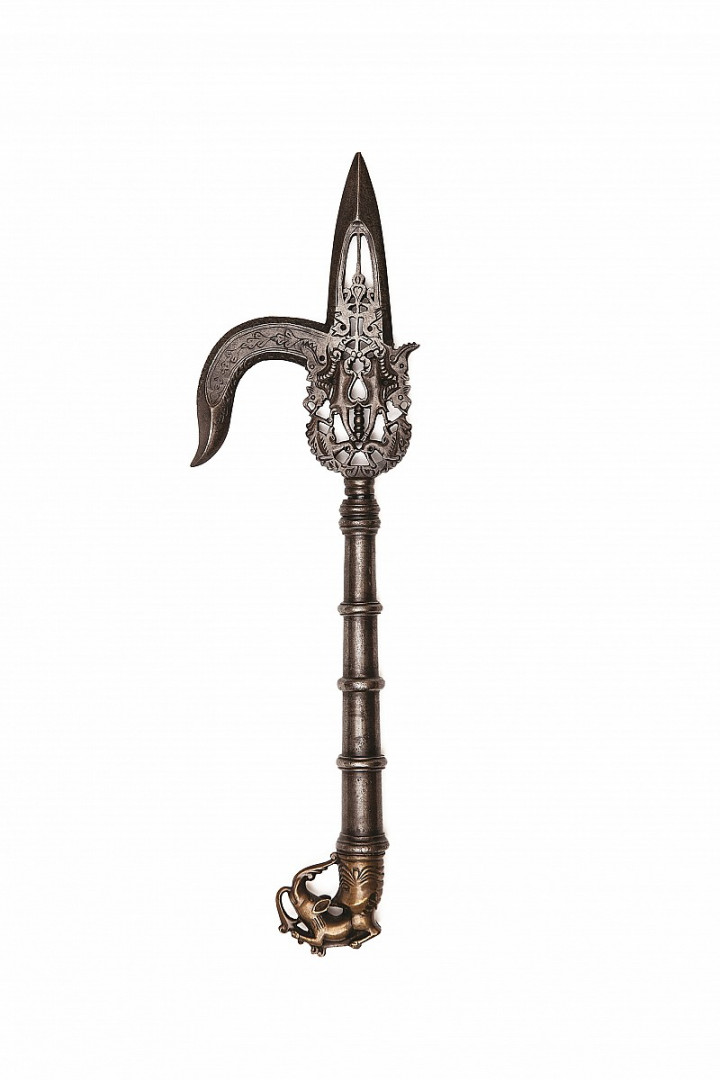
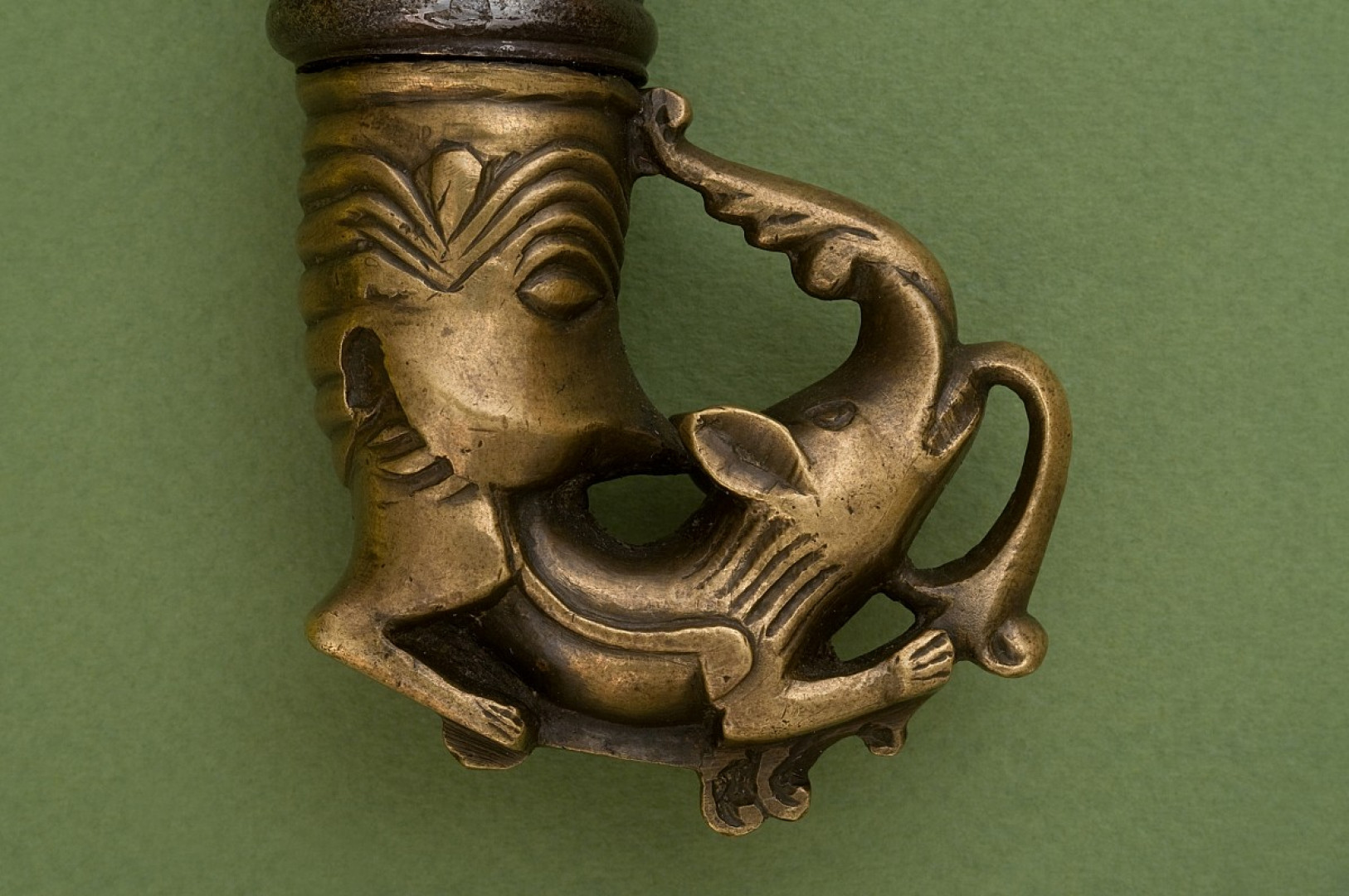
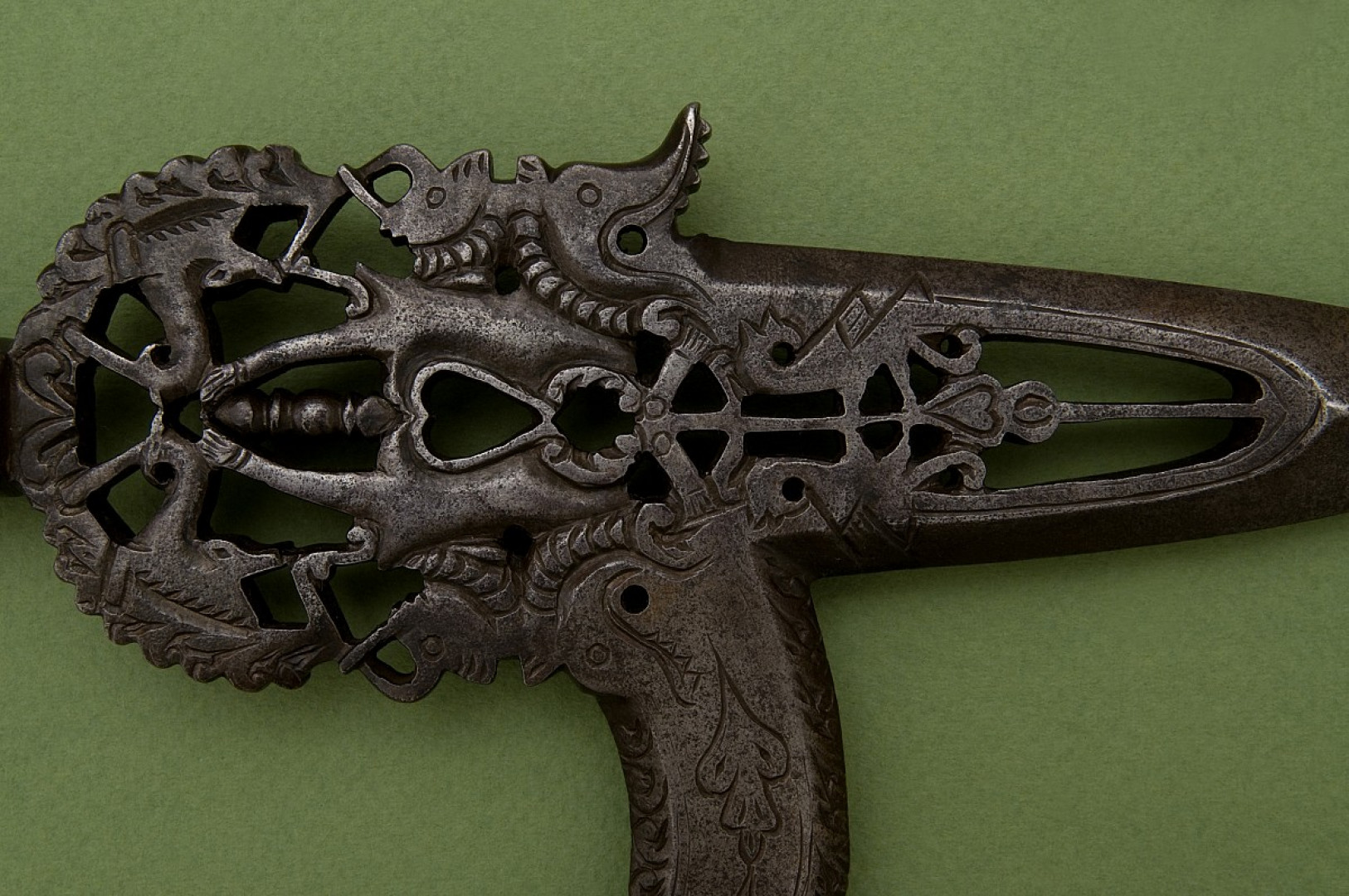
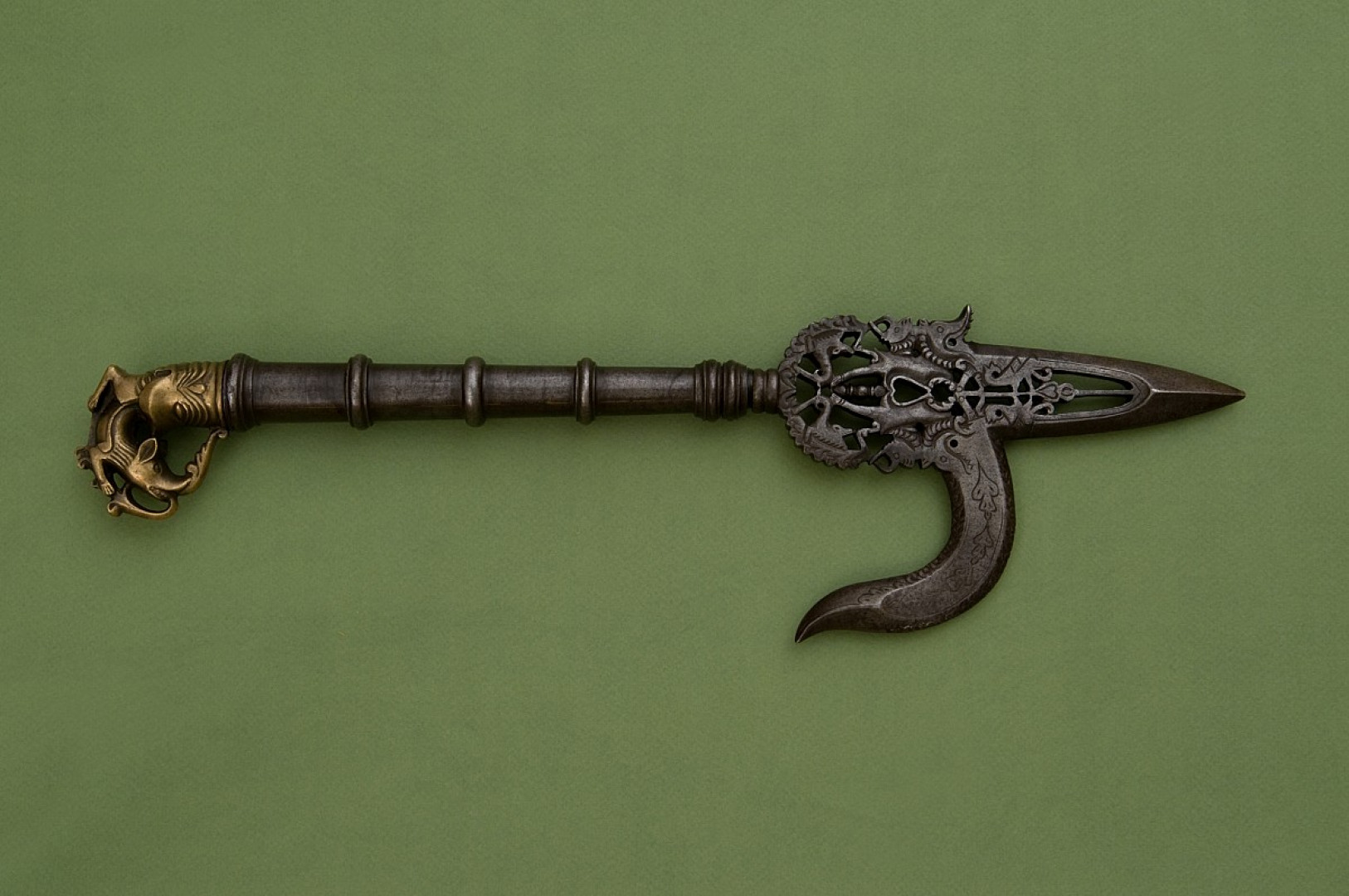
The large leaf-shaped spike is pierced with depictions of fantastic creatures arranged mirror-symmetrically in relation to the central line. The hook is engraved with a simple floral design. The short tubular haft consists of four sections divided by rings. The cast brass butt of the haft is formed as a monster’s head, which is ejecting from its mouth a dog-like animal with an unusually long tongue.
COMMENT. Ankus is the Indian name for a special goad, which is used to control an elephant. It consists of a metal hook and pointed spike that usually attached to a wooden haft. The word "ankus" (or ankusha) derives from the Sanskrit "aṅka", which means "hook". The elephant trainer (mahout) was supposed to accustom the huge animal to respond to the slightest pressure exerted by the hook and spike upon the most sensitive areas of his head. In India, the elephant was considered to be the personification of power, wisdom and majesty since the ancient times. The best elephants had a pride of place in royal stables and played an important role in religious and secular processions, while the ornate short metal goads were used as an indicator of status and a sign of royalty.
This example belongs to the group of almost identical elephant goads that were made most likely in Tanjore (now Thanjavur) over a long period of time, beginning in the 16th or 17th century. The skillful metalwork and the elegant design indicate that they were intended for important persons. Several examples can be seen, in particular, in the Albert Hall Museum in Jaipur (inv. no. 1004), in the Royal Armouries Museum in Leeds (inv. no. XXVIM.4), in the Walters Art Museum in Baltimore (inv. no. 51.61), and in the Metropolitan Museum of Art in New York (inv. no. 36.25.1868, see Stone, G.C. Glossary of the Construction, Decoration and Use of Arms and Armor in all Countries and in all Times. – Portland, 1934. – P. 9, fig. 15, no. 5; Jackson, A., Jaffer, A. Maharaja: The Splendour of India's Royal Courts. – New Delhi, 2010. – P. 45, no. 32).
LITERATURE: Сиваченко Е. Сталь и Золото: Восточное оружие из собрания Feldman Family Museum = Steel and Gold: Eastern Weapons from the Feldman Family Museum Collection. – Киев, 2019. – С. 542-543, №225.