A dress small sword
All subject photos
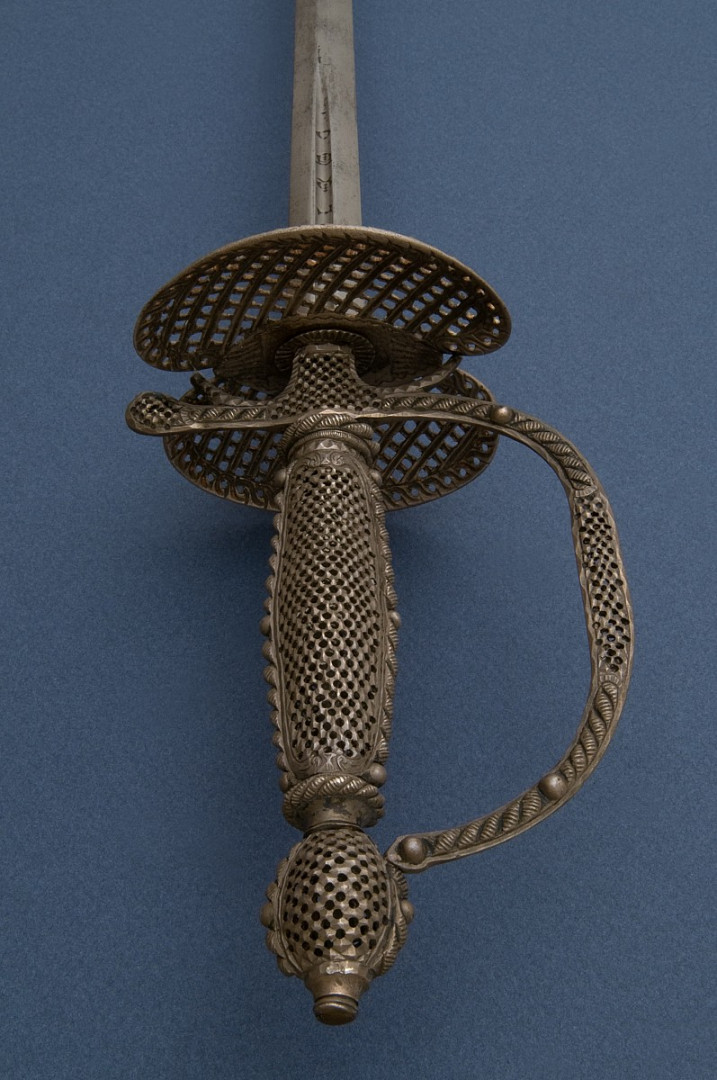
Museum: Feldman Family Museum
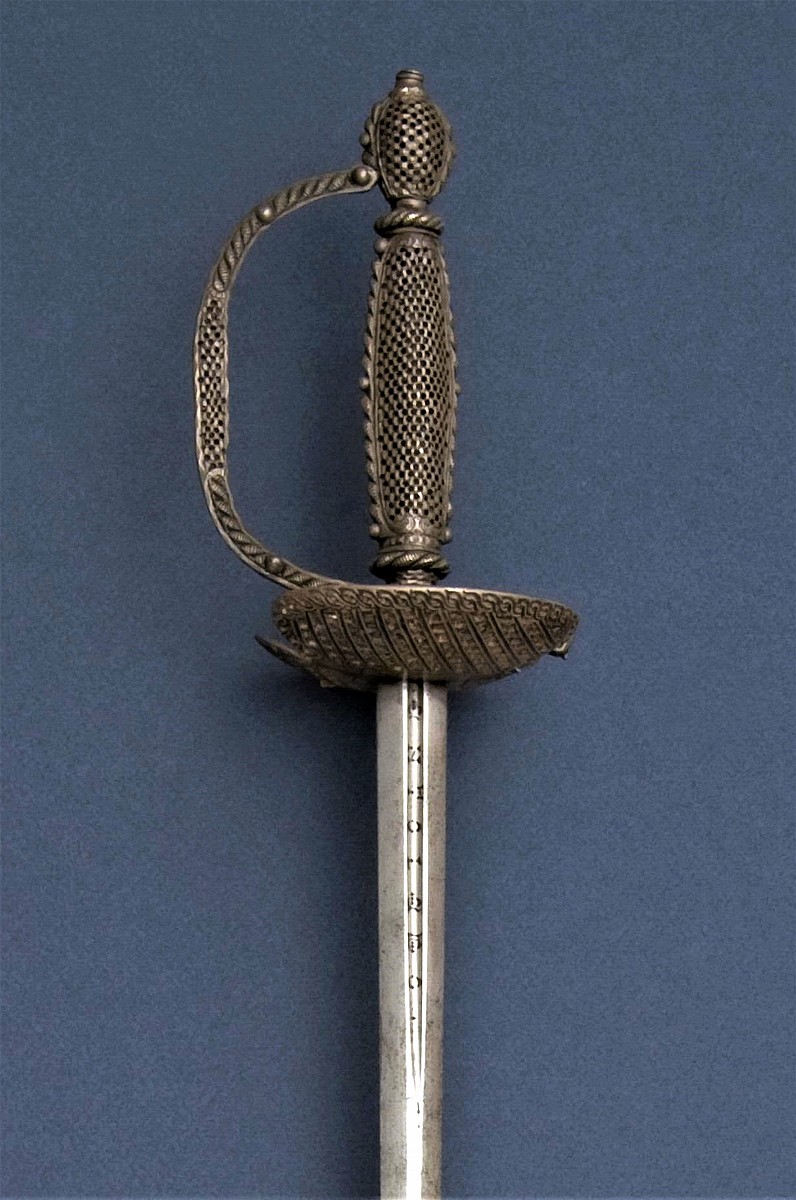
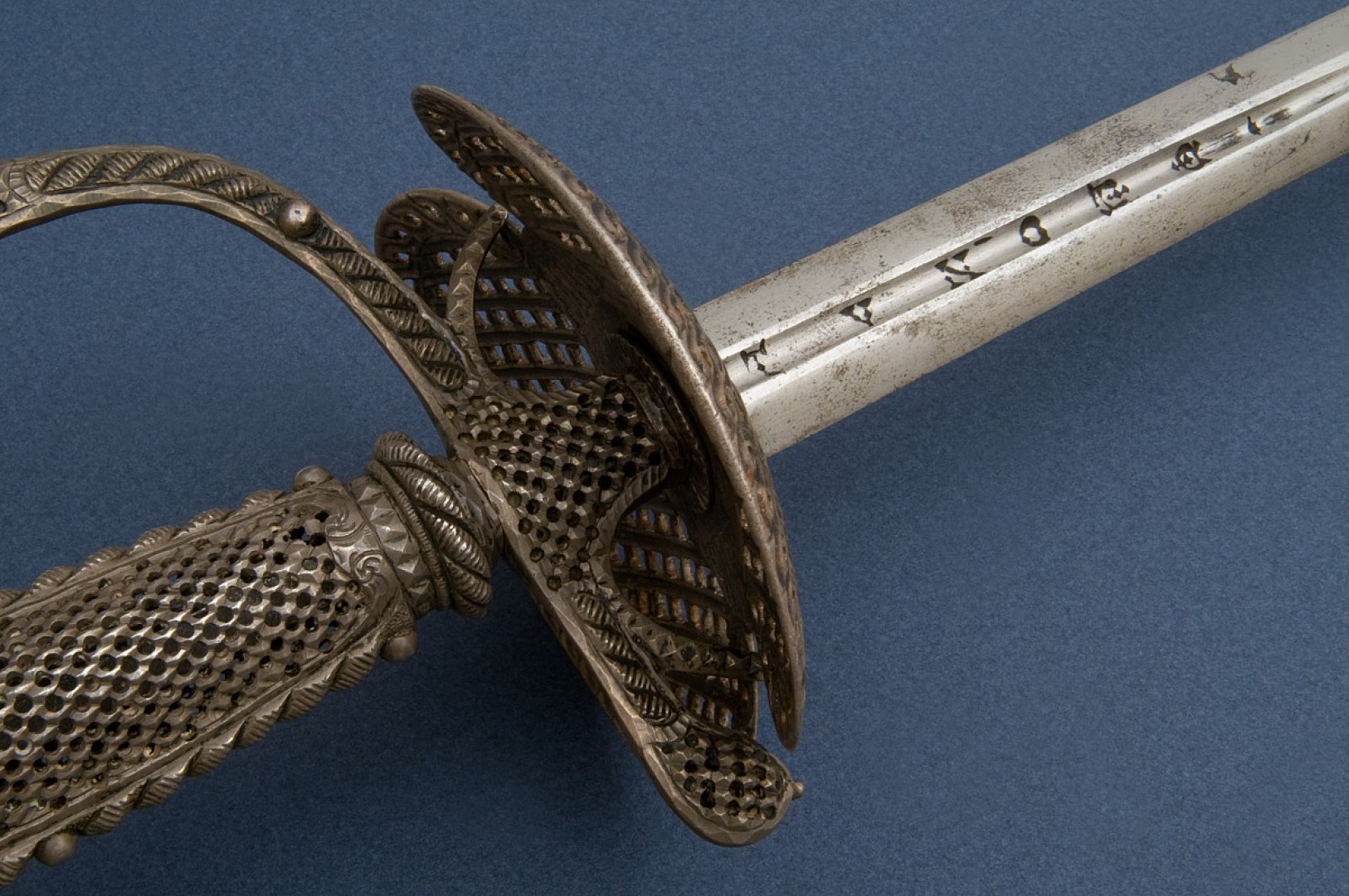
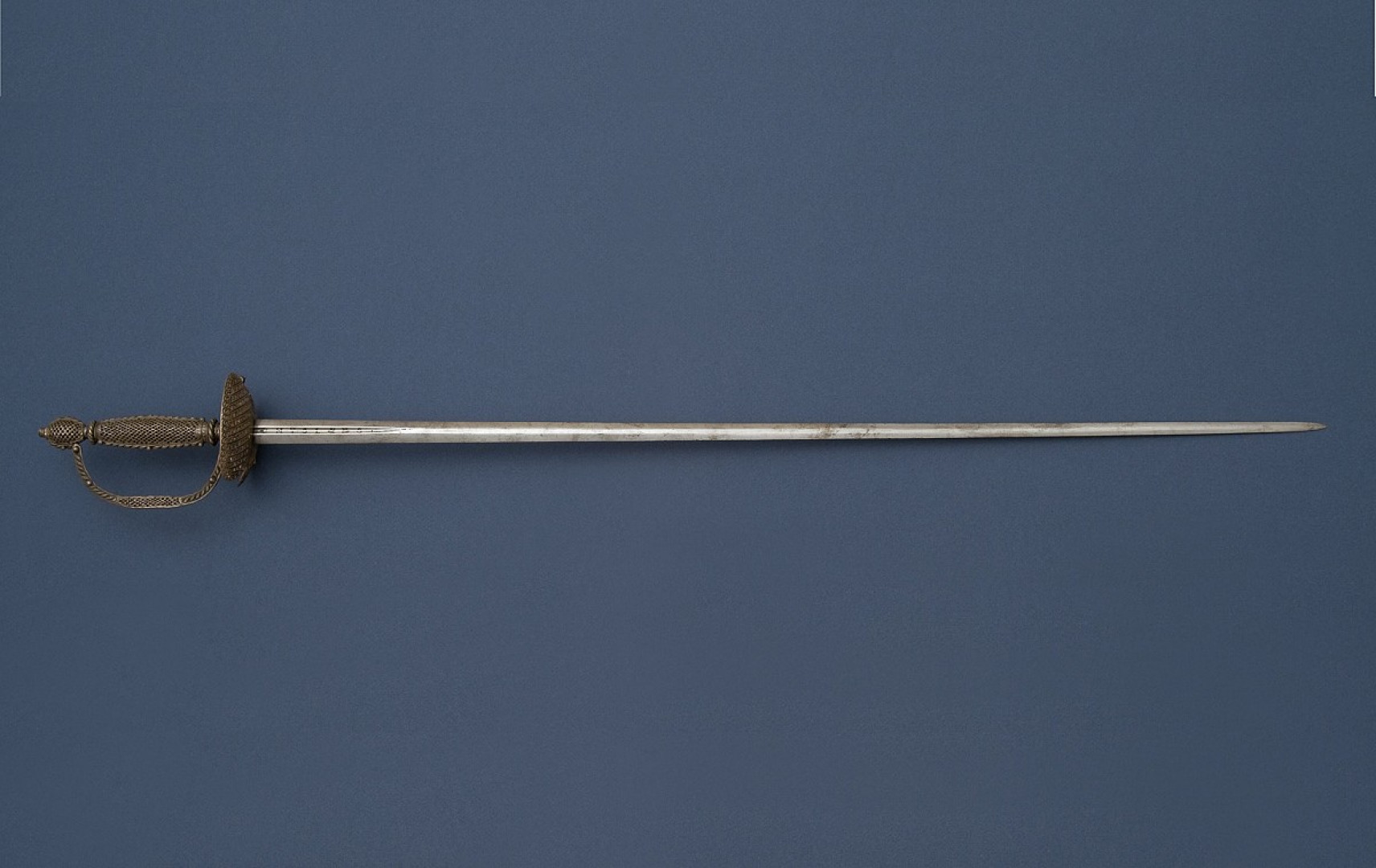
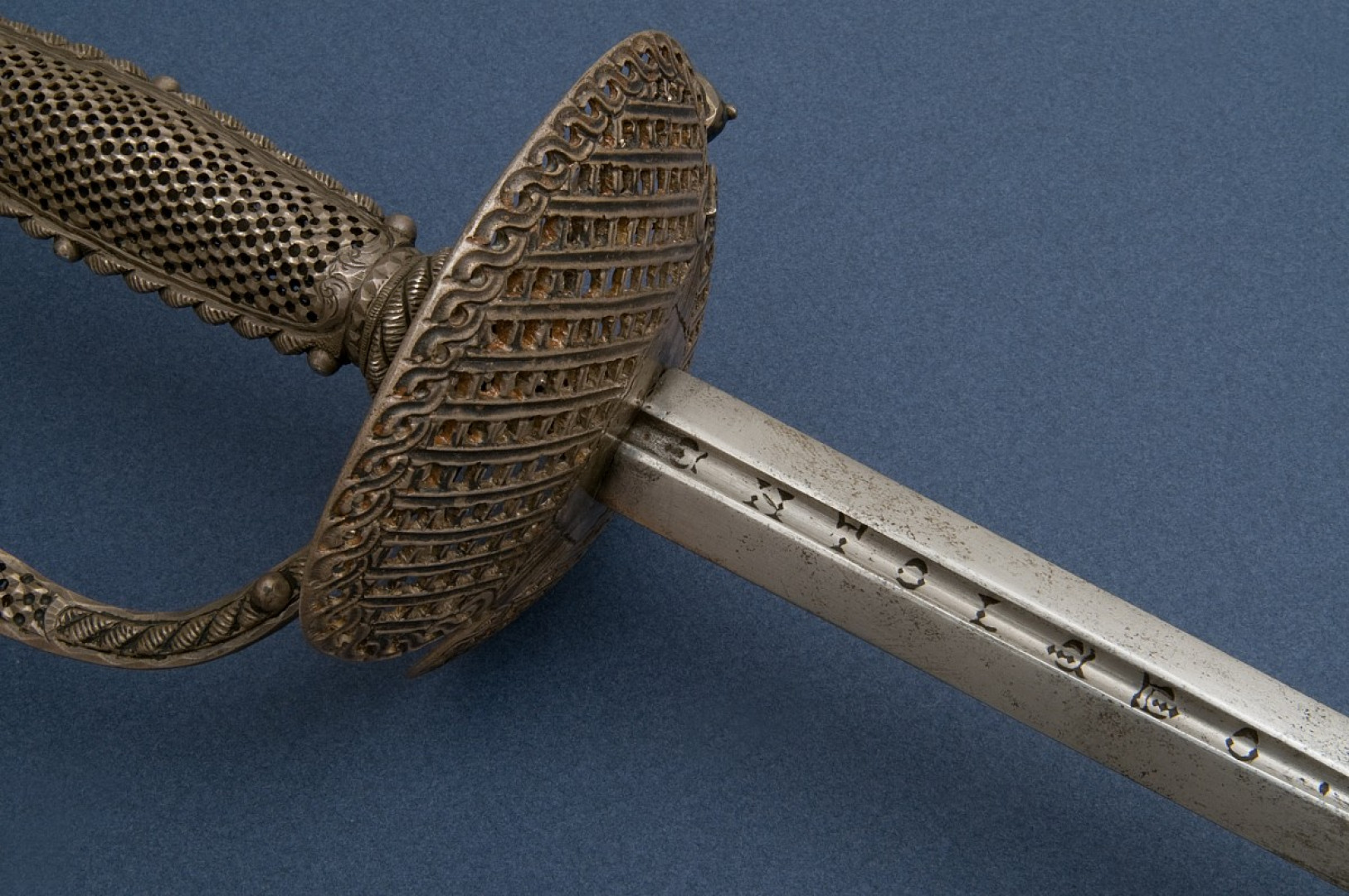
The straight double-edged hexahedral blade is made of plain steel. In the upper part of the blade, along the middle facet, there is a narrow short fuller with the stamped letters N, T, O, L on the right side, and the letters T, V, N, O on the left side. The silver openwork hilt consists of a grip and a guard that have many small through holes. The guard is formed by a cross-guard, a knuckle-bow, a double oval cup and two half rings. No scabbard.
COMMENT. The presented item is a Western European dress small sword of the late 17th or early 18th century. Determining the exact place of manufacture is not possible. During the specified period, lightweight dress small swords with openwork hilts were manufactured in Germany, France, Holland, and Spain. It should be noted that the abbreviation "NTOL" is actually the inscription "EN TOLEDO" ("In Toledo"). In Spanish blade inscriptions, the letters E and D are generally engraved in a more decorative fashion than the other letters (see Ffoulkes, Charles J. Inventory and Survey of the Armouries of the Tower of London. Volume II. – London, 1915. – P. 289), and therefore they can easily be mistaken for ornament elements. Rather delicate silver work is noteworthy. Since silver is very soft, the openwork hilt surely was not suitable for repelling enemy blows. Therefore, the small sword was only an accessory for a camisole or a court dress. It has great historical and cultural value as a well-preserved and rather rare example of Western European edged weapons of the late 17th and early 18th centuries.