A gold-mounted karud knife
All subject photos
Museum: Feldman Family Museum
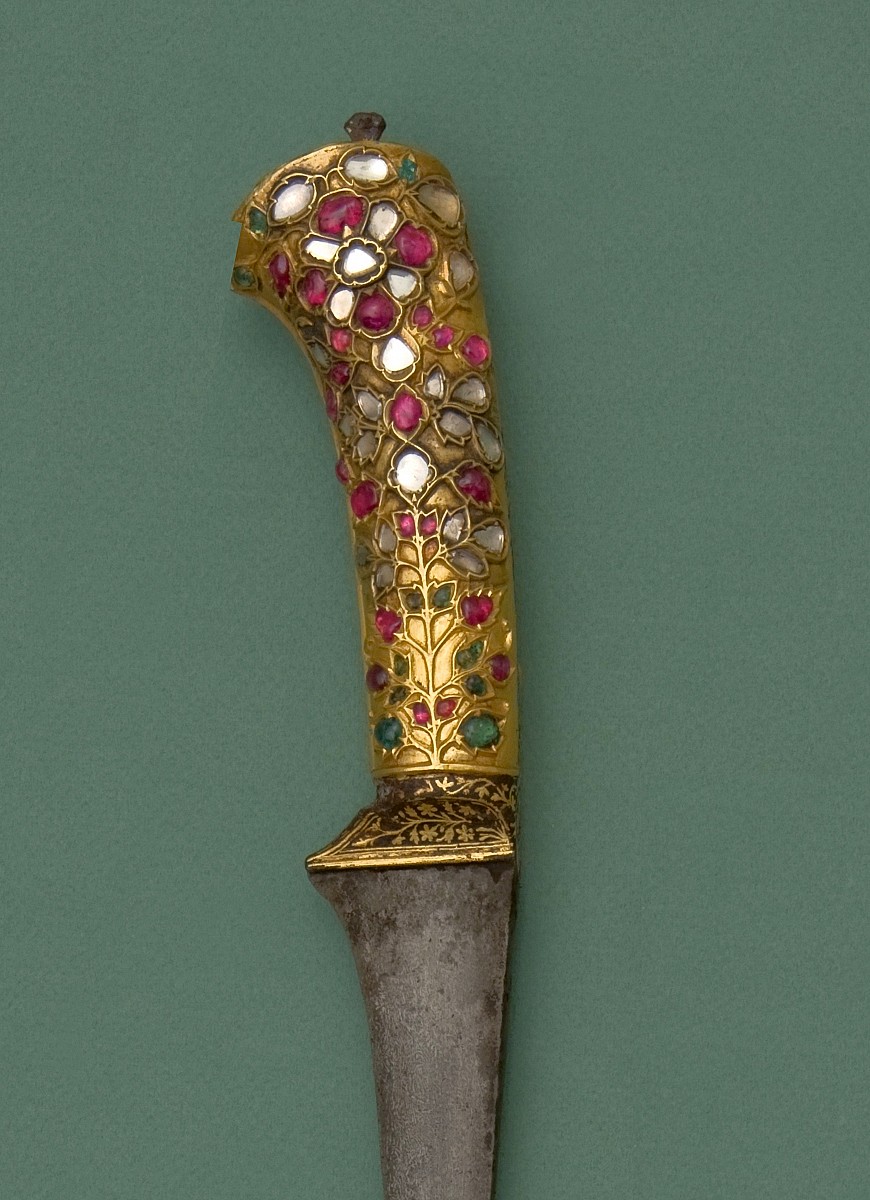
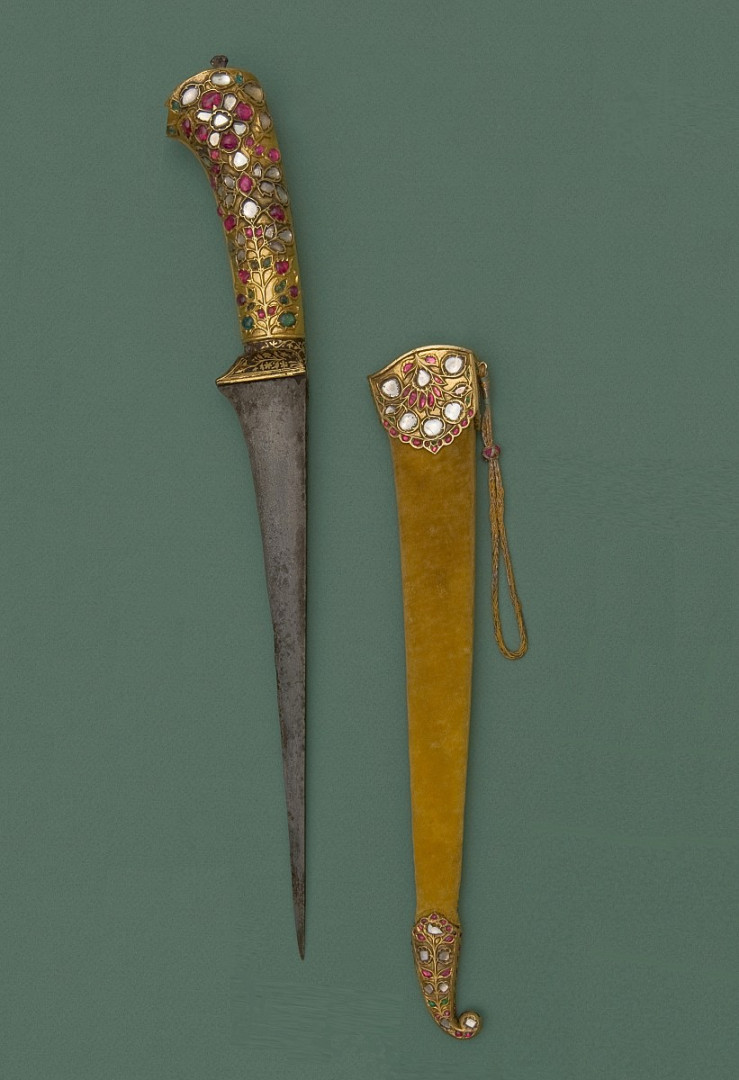
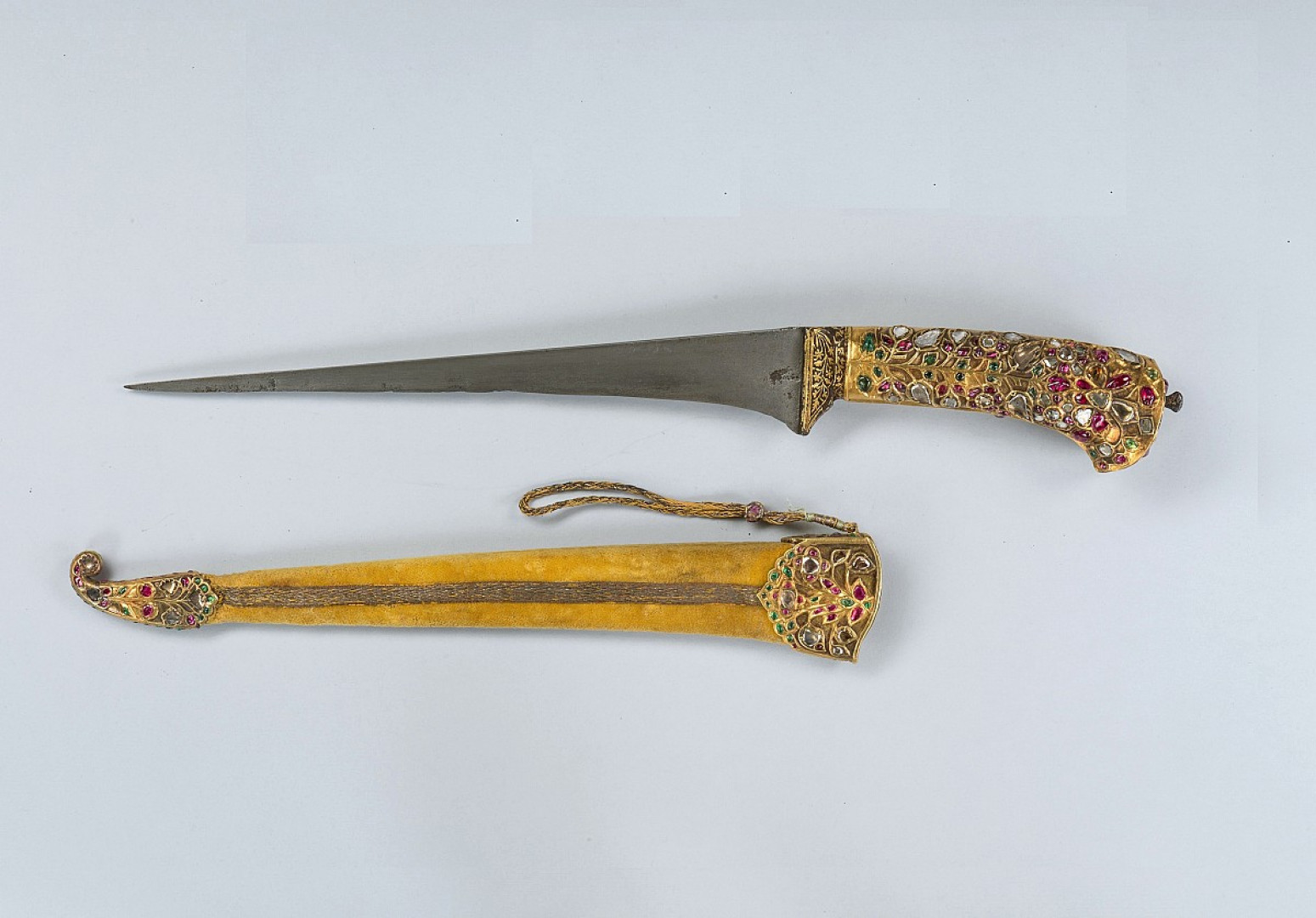
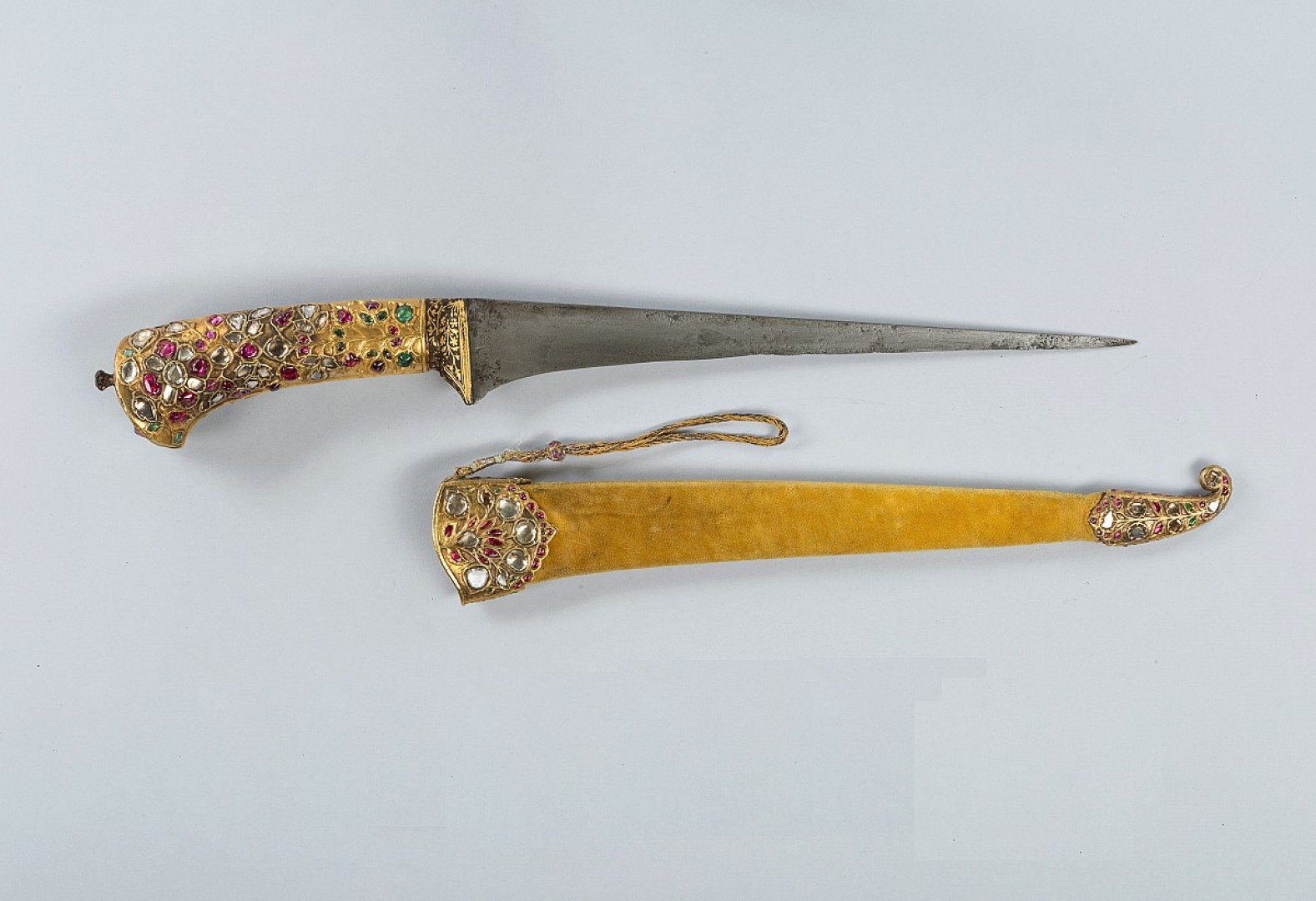
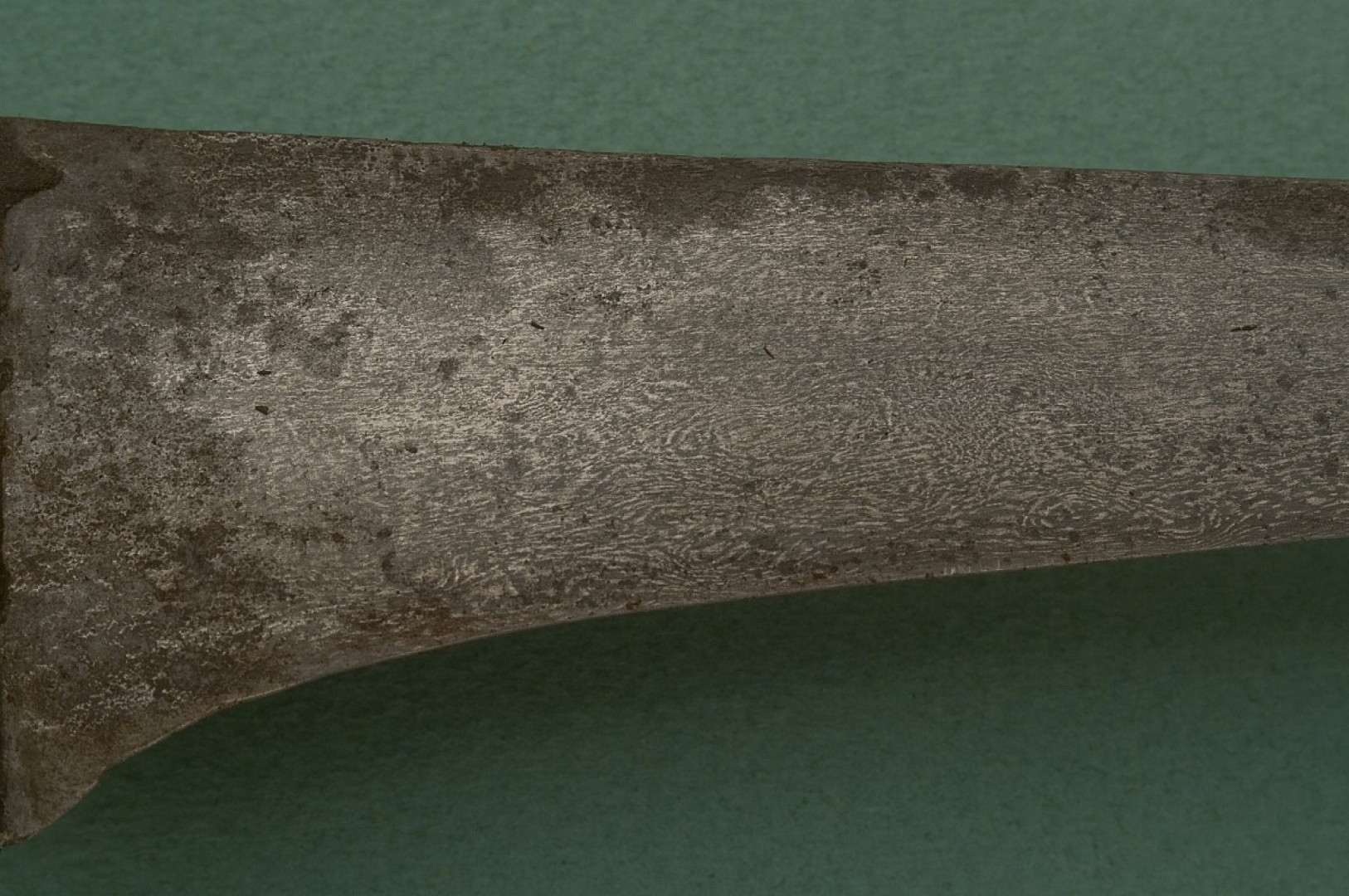
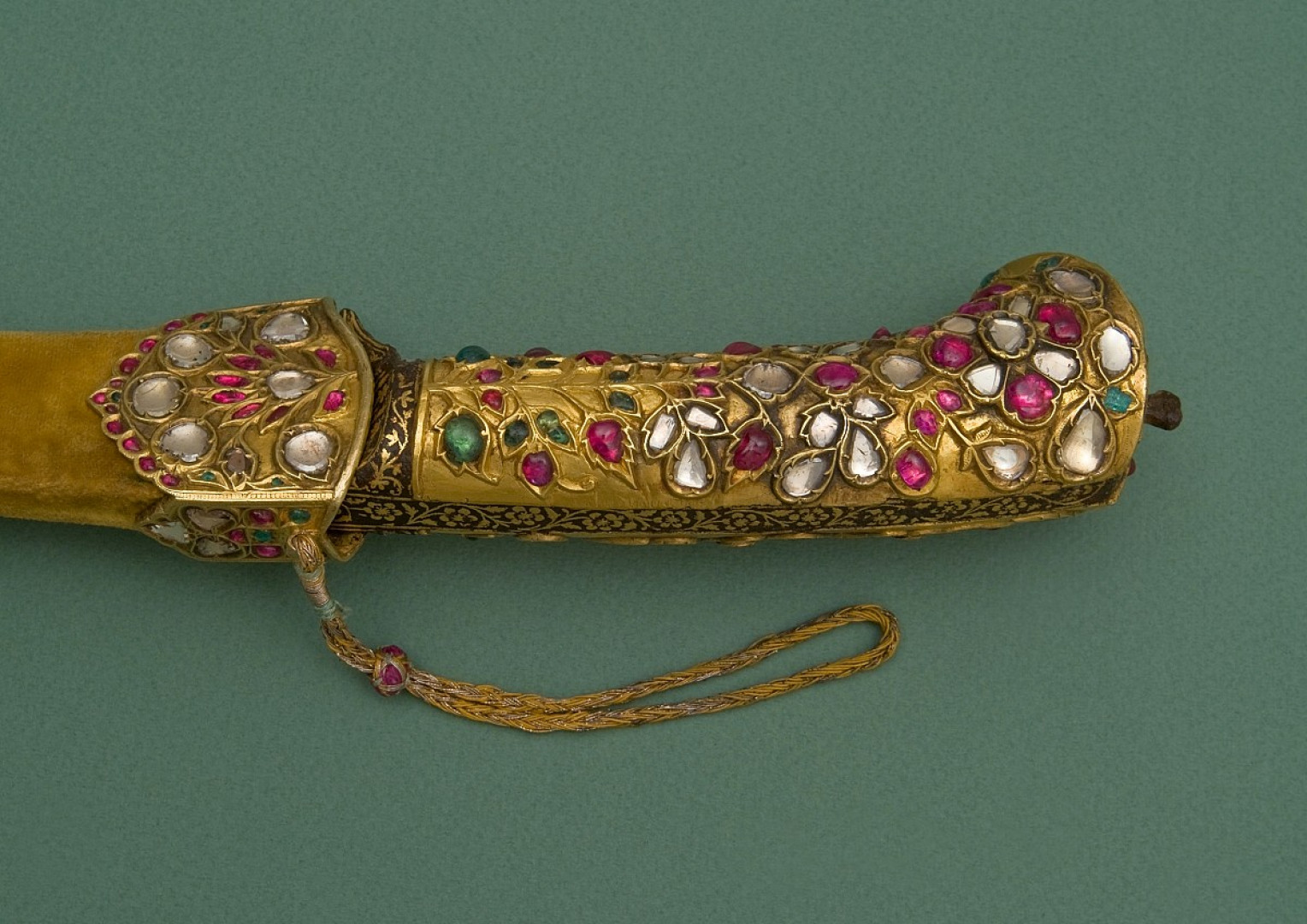
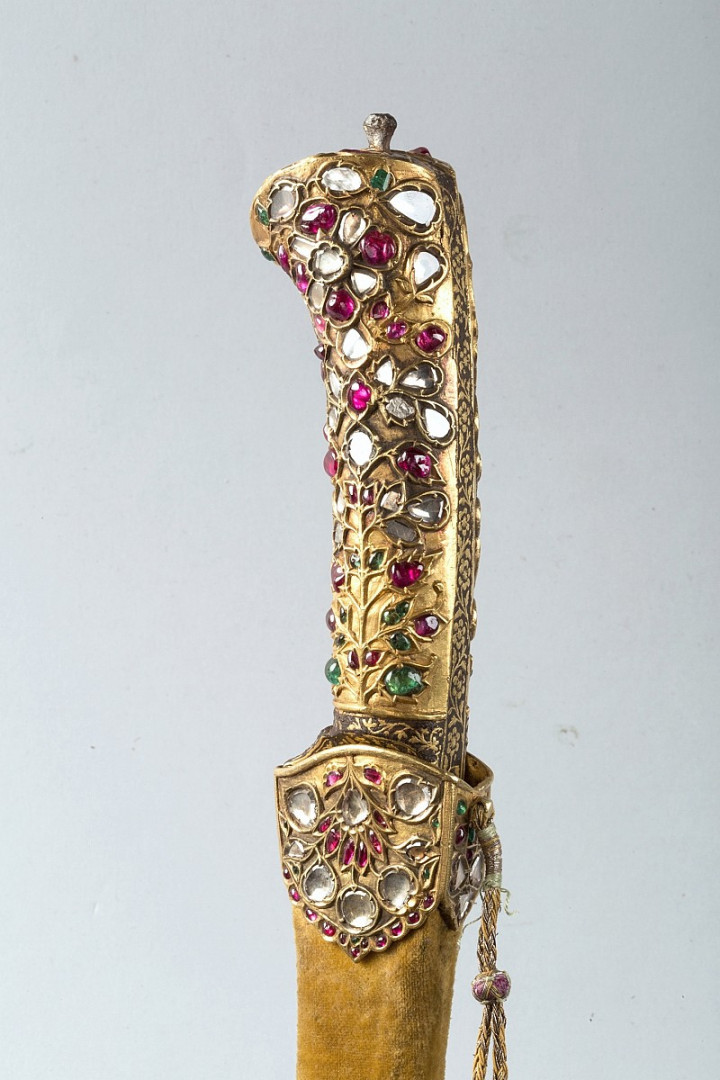
The blade is made of watered steel with a thickened spine but without a typical T-shaped cross-section. The hilt is formed by two cast gold scales each with a raised vegetal design set with numerous gems in deep sockets. The grip strap and bolster are made of iron and decorated with gold koftgari vegetal motifs. The wooden scabbard covered with yellow-brown velvet. The scabbard mounts are decorated en suite with the grip scales. The scabbard locket features a small lug to which a metal-thread cord is attached. Total 132 rubies, 90 diamonds, and 87 emeralds on the hilt and scabbard.
COMMENT. Karud is a type of Iranian armour-piercing knife with a straight blade. This weapon is often viewed as a straight-bladed version of peshkabz and is compared to the Afghan choora. Indeed, the karud is characterized by a single-edged blade with a straight, T-shaped spine and a reinforced cutting edge, which acutely tapers from the base to the point, similarly to the peshkabz and choora blades. At the same time, there are variants of karud with gradually tapering blades that are more resemble the kard shape. The straight or almost straight hilt varies in thickness, but it usually has a beaked pommel. Like the peshkabz, the karud was used not only in Iran itself but also beyond, particularly in Central Asia, Afghanistan and those parts of the Indian subcontinent that were under Mughal rule. The presented knife is an extremely rare example of karud of early form, which was made in the 17th century in the Mughal domain.
LITERATURE: 1) Сіваченко Є. Холодна зброя Сходу з колекції Олександра Фельдмана: [фотоальбом]. – Харків, 2009. – С. 36; 2) Hales, R. Islamic and Oriental Arms and Armour: A Lifetime’s Passion. – London, 2013. – P. 34, no. 78; 3) Сиваченко Е. Сталь и Золото: Восточное оружие из собрания Feldman Family Museum = Steel and Gold: Eastern Weapons from the Feldman Family Museum Collection. – Киев, 2019. – С. 488-489, №198.