A hunting dirk
All subject photos
Museum: Feldman Family Museum
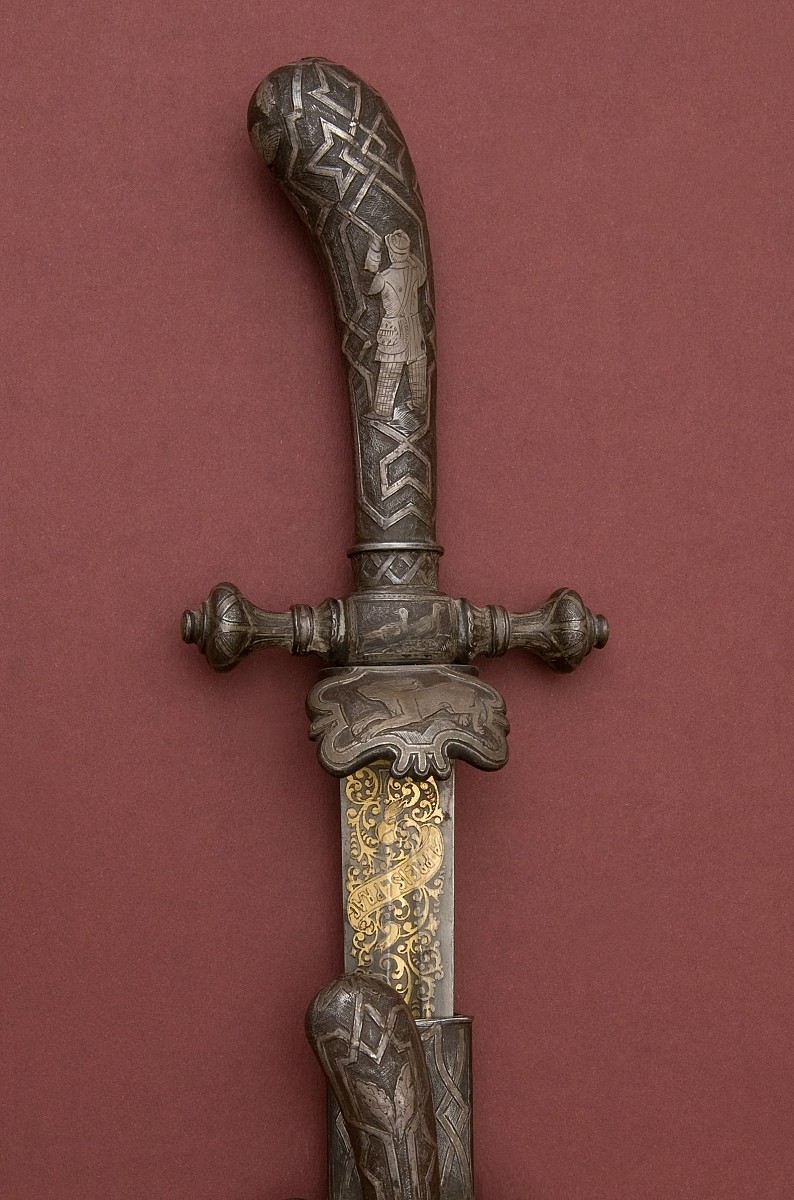
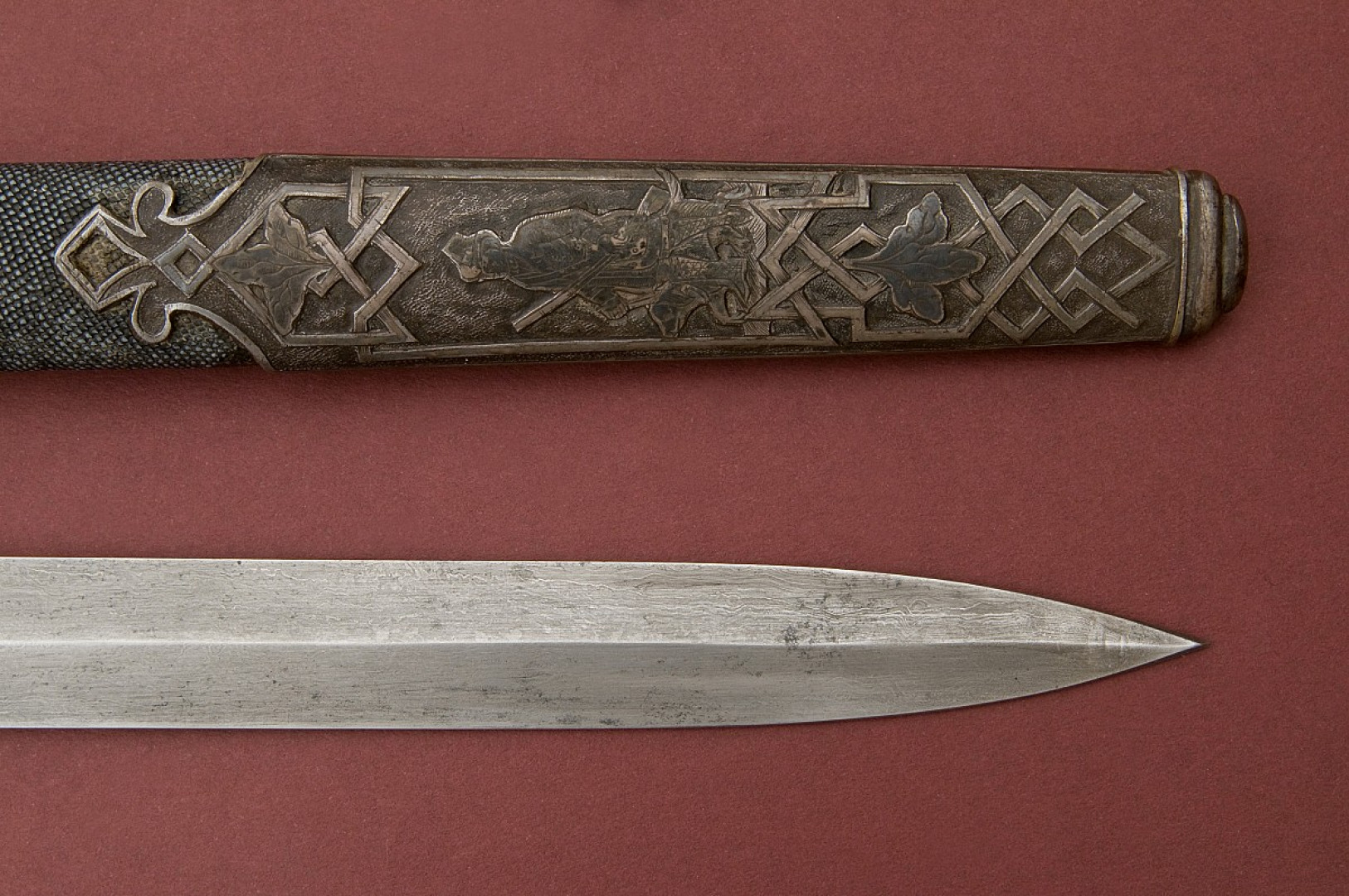
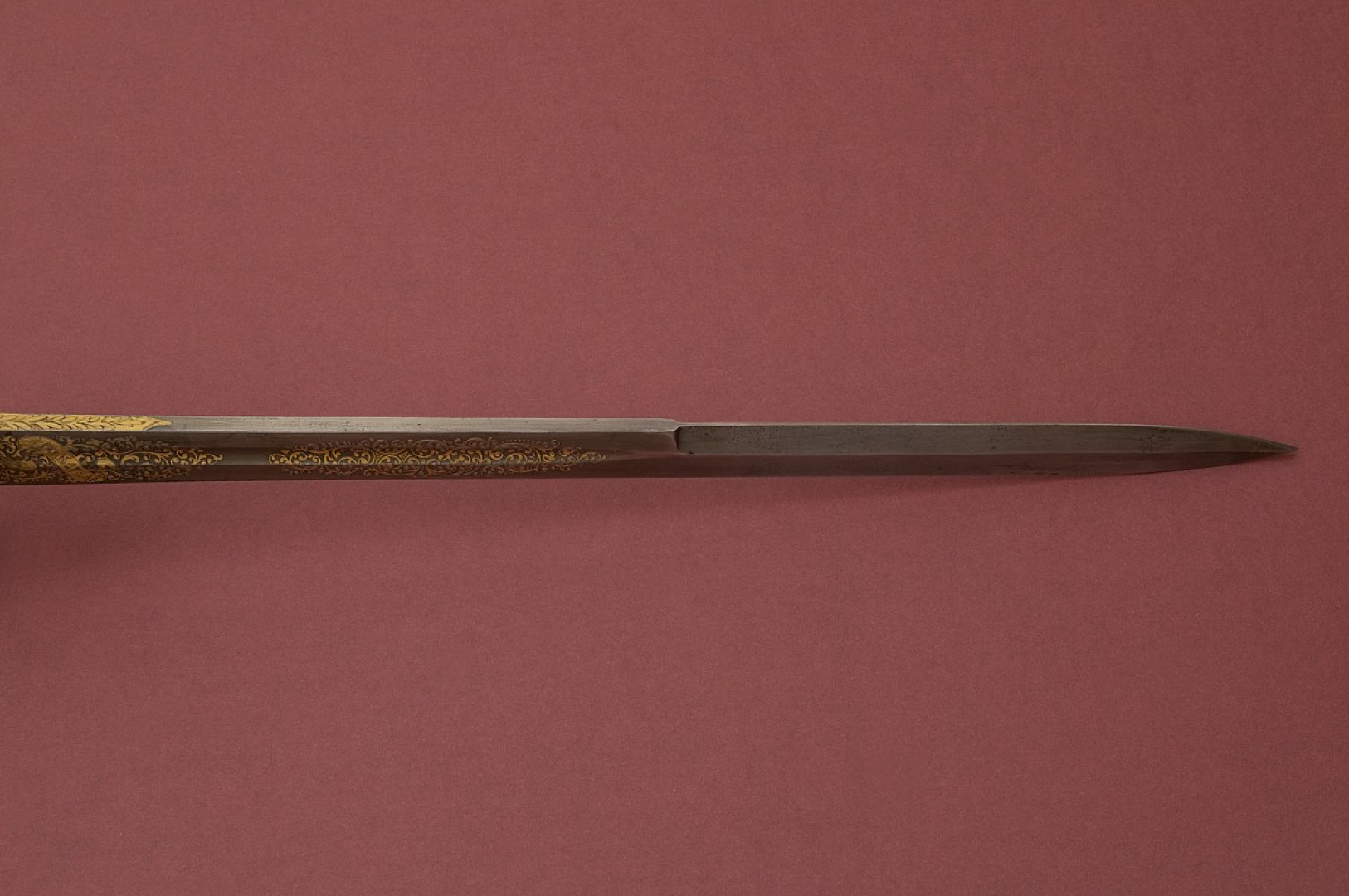
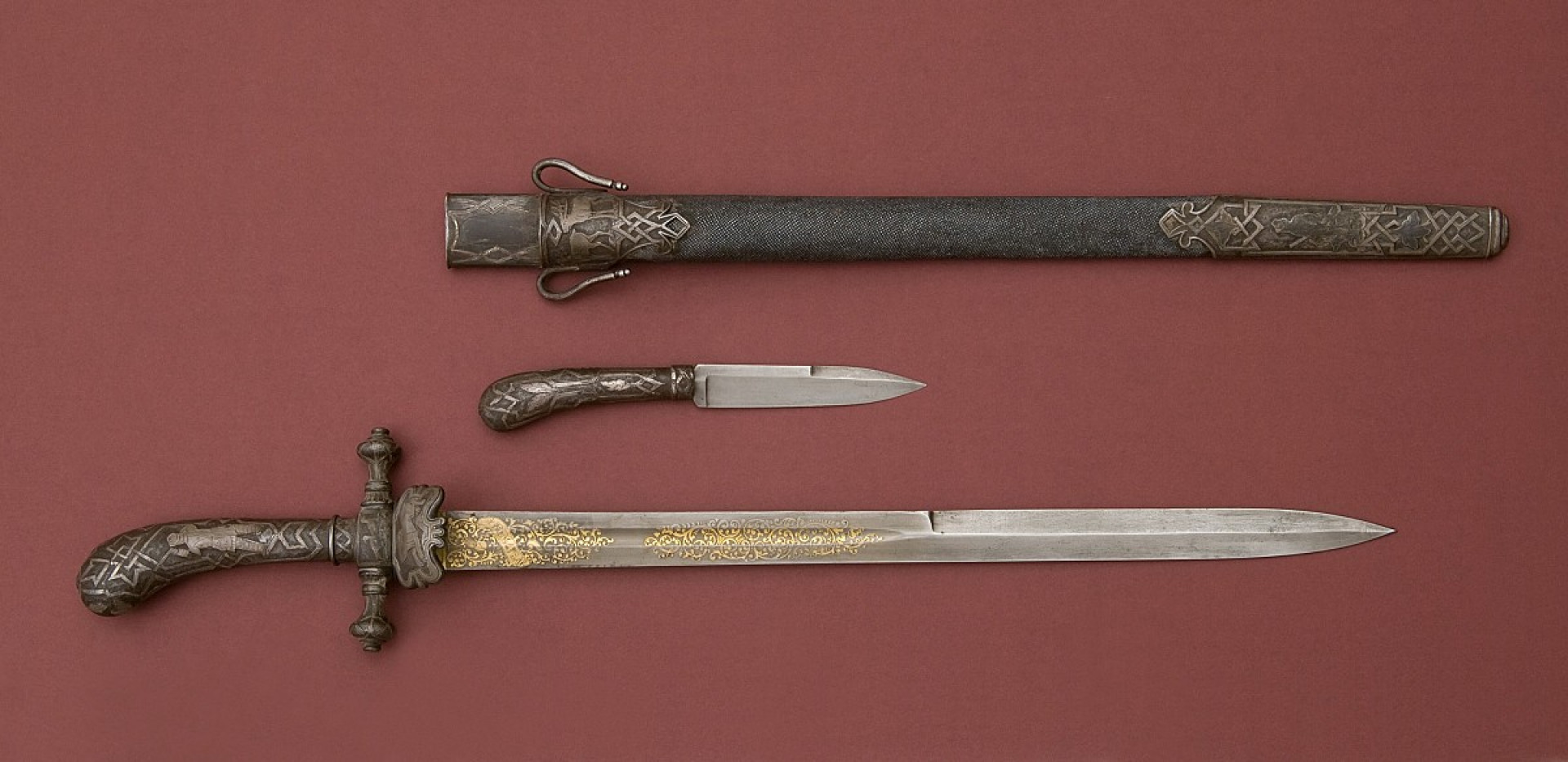
The straight single-edged blade is made of plain steel with one narrow fuller along the back in the upper half. In the lower half, the blade is double-edged, rhombic in cross section. The point is located on the midline of the blade. The entire surface of the blade is etched "like damascus". In the upper half, the blade is etched and gilded with a twisted floral ornament on both sides and along the back. On the right side of the blade, in the tape, there is a German inscription "A. PREIS IN PRAG" ("A. Price in Prague"). The iron hilt consists of a grip and a cross-guard, under which a figured rain-guard is located. The grip is decorated with an image of a hunter with a rifle on the right side and oak leaves on the left side. The thick straight cross-guard has figured ends. Two birds are depicted in the middle part of the cross-guard on the right side. A hare is depicted on the rain-guard. The wooden scabbard is covered with pebbled leather. The iron scabbard mounts consist a chape and a locket with two hooks on the edges. A deer with a fawn is depicted on the locket, and a hunter with a rifle and a dog on the chape. In the upper part of the scabbard on the outside, there is a pocket into which a small additional knife with an iron handle and a single-edged blade is inserted. The knife handle is decorated with a geometric ornament and oak leaves.
COMMENT. The presented item is an Austrian hunting dirk dated to the second half of the 19th century. Judging by the inscription on the blade, it was made in Prague, which at that time was part of Austria-Hungary. The hunting dirk (dagger, short sword) in German is called hirschfänger, literally "deer hunter's knife", and it was intended to finish off the hunted beast Hirschfängers became fashionable in Western Europe since the second half of the 17th century in the wake of the growing popularity of the so-called par force hunting, however they were almost exclusively used as an accessory for a hunting costume in the second half of the 19th century. Hirschfängers with marks of Austrian craftsmen and firms are quite rare. Noteworthy is the superd condition of the presented dirk, in which even an additional knife is preserved. The dirk is of great historical and cultural value primarily as a well-preserved rare example of the 19th century Austrian hunting edged weapons.