A hunting dirk
All subject photos
Museum: Feldman Family Museum
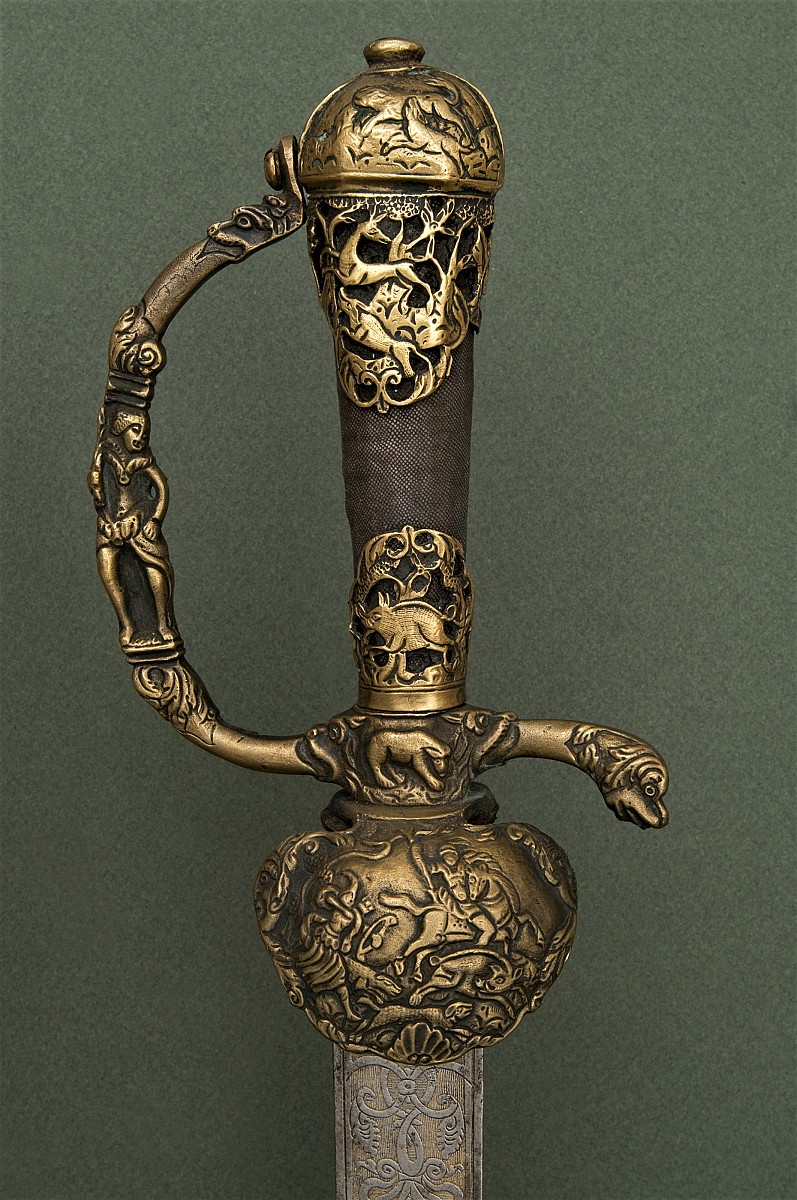
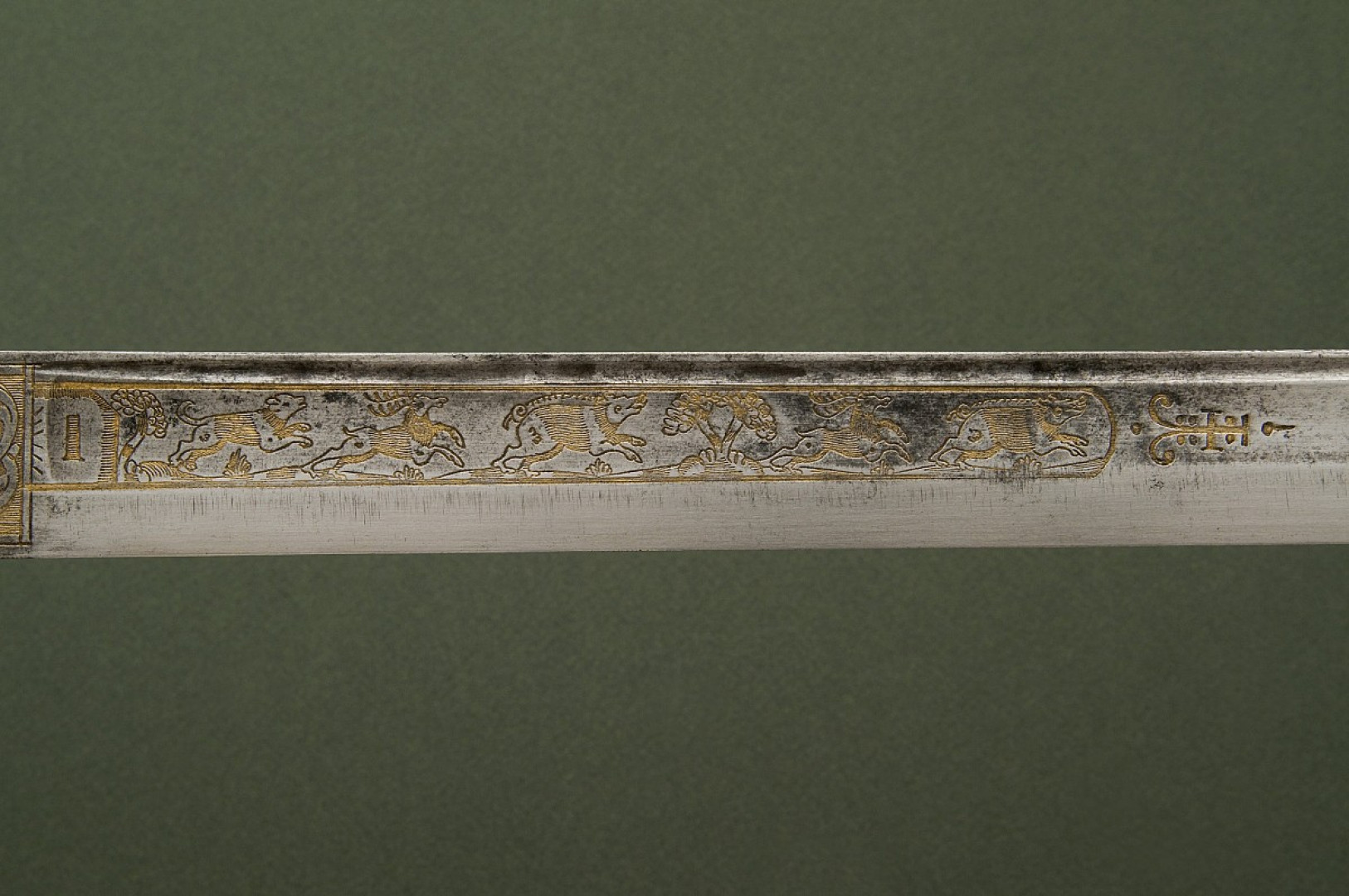
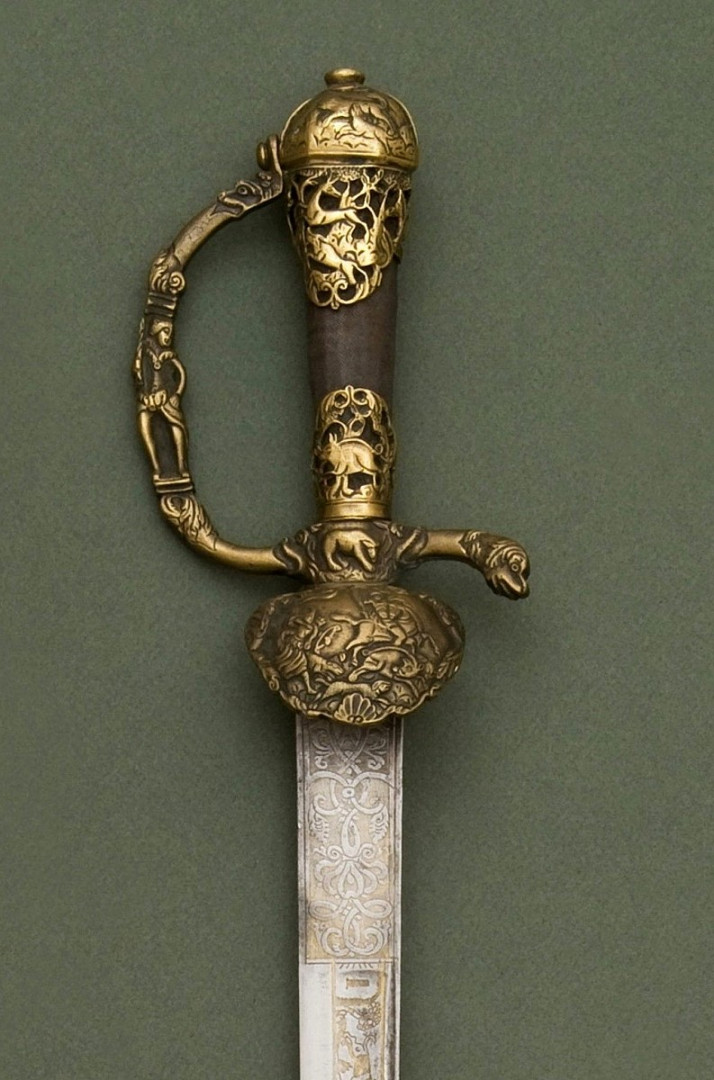
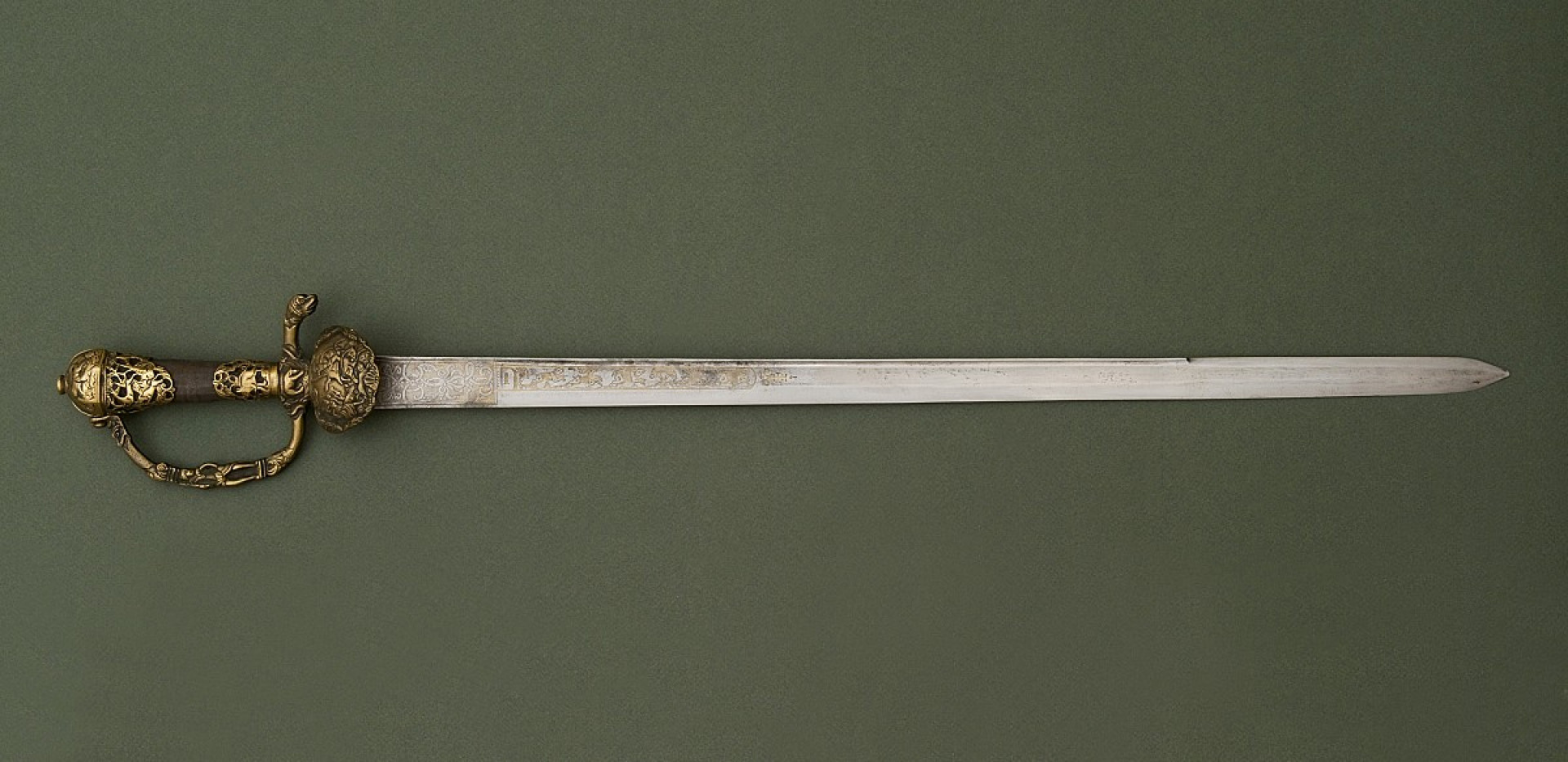
The straight single-edged blade is made of plain steel with one poorly expressed wide fuller and one narrow fuller along the back. The blade tip is double-edged. In the upper part, the blade is decorated on both sides with engraved and gilded floral ornaments, somewhat schematic images of a wild boar, deer, and dog. The hilt consists of a grip and a guard. The wooden grip, smoothly thickening upwards, is covered with a scabrous tin sheet imitating the surface of the stingray or shark skin. On the bottom of the grip, there is a figured brass ferrule pierced with a wild boar image. At the top of the handle there is also a figured brass ferrule pierced with a dog and a roe deer images. On the left side, along the grip, there is a brass strip with the image of a hunter aiming at a fox hunted by a dog. On the rounded pommel, there are depictions of dogs hunting a wild beast. The brass guard is formed by a figured knuckle-bow that turns into a cross-guard, under which there is a figured rain-guard. The middle part of the knuckle-bow is formed as a human figure. In the middle of the cross-guard, a bear and a wild boar are depicted on the different sides. The opposite cross-guard end is formed as a dog's head. The rain-guard depicts two hunters and dogs hunting a boar. No scabbard.
COMMENT. The presented item is a Western European, most likely German, hunting dirk dated mid-18th century. The hunting dirk (dagger, short sword) in German is called hirschfänger, literally "deer hunter's knife", and it was intended to finish off the hunted beast, Hirschfängers became fashionable in Western Europe since the second half of the 17th century in the wake of the growing popularity of the so-called par force hunting. Horse hunters, with the help of hound dogs, droved a deer, roe deer, wild boar or other animal to complete exhaustion and finished it off with one precise blow of a sharp blade into the heart. The German origin of the presented dirk can be indicated by some features of the stylistics of the blade decorations, namely, somewhat schematic animal images, the ornament on the blade base. However, the same traits can be found on edged weapons of the same period, made by Dutch craftsmen. One way or another, but the dirk is of great historical and cultural value as a fairly well-preserved example of the mid-18th century Western European hunting edged weapons.