A war hammer
All subject photos
Museum: Feldman Family Museum
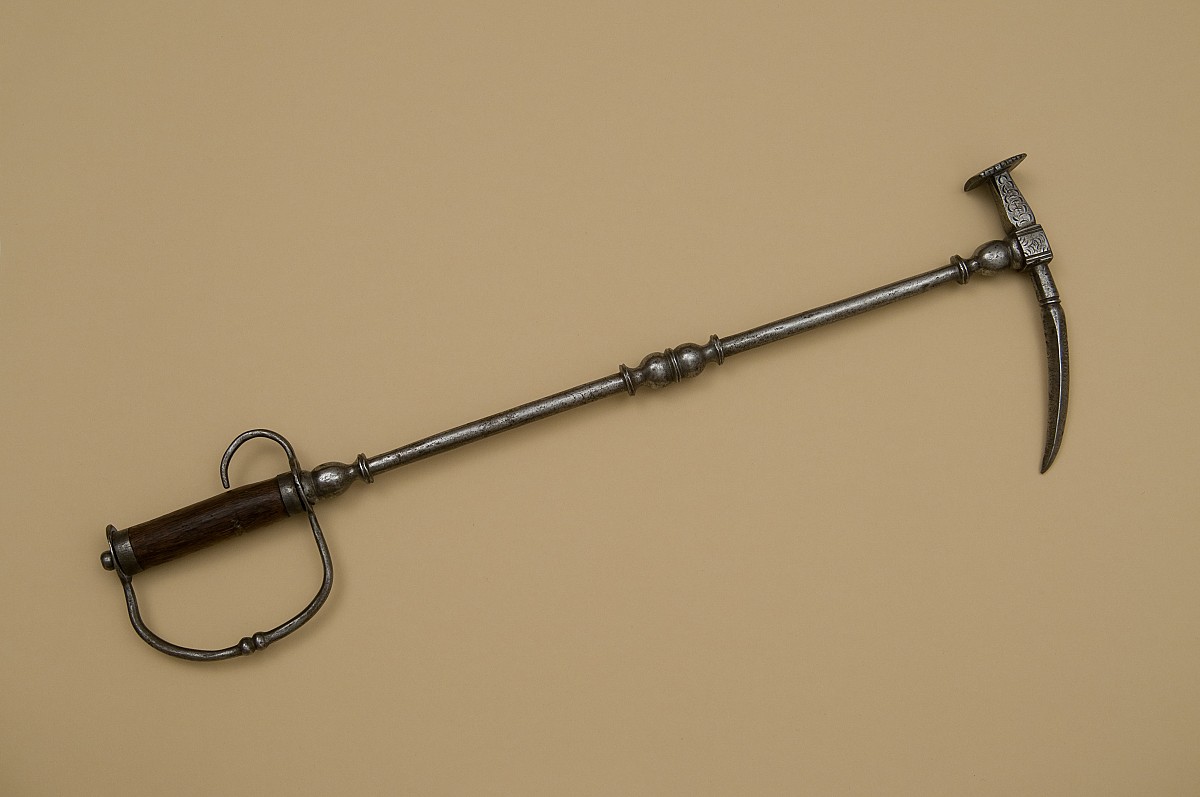
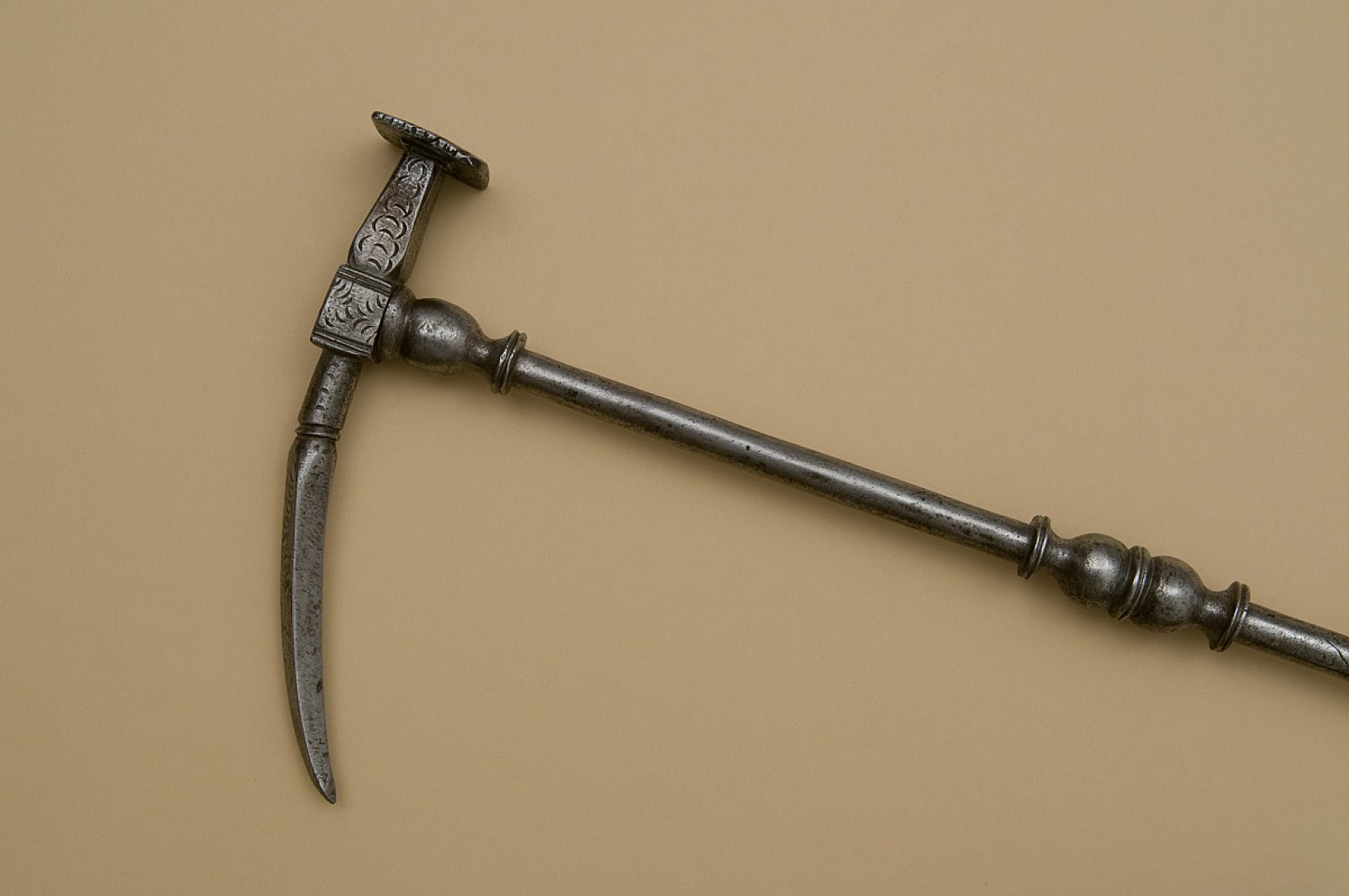
The steel head consists of a long tetrahedral, slightly bent beak and a quadrangular widened hammer. The head is decorated with simple geometric patterns. Quite subtle cylindrical shaft has a double frieze in the middle. The cylindrical wooden handle is limited by two steel discs and ferrules, and closed by a subtle knuckle-bow with a double frieze in the middle. The upper part of the handle is also closed with a small steel loop.
COMMENT. The presented item is a Western European, most likely German, war hammer dated 16th century. War hammer is a medieval strike combat weapon resembling a hammer in design, but supplemented by a beak, that is, a faceted spike, a sharp rod or a thick blade, which is located on the back of a metal head and usually tilted or bent towards the handle. War hammers were used mainly in close combat against an armored enemy. They gained particular popularity in Europe during the Late Medieval Period (14th - 16th centuries) due to the spread of durable plate armor. With a hammer, it was possible to deform the armor and stun the enemy. The beak made it possible to pierce an armor plate, break chain mail, and also grab the enemy's weapon and pull the rider off the horse. The spread of firearms led to the fact that the war hammer in the 17th and 18th centuries began to be used mainly as a sign of military rank of and a symbol of military power. The 14th - 16th centuries strike combat weapons survived to this day mainly only in large museum collections. The presented war hammer is of great historical and cultural value as a very rare and well-preserved example of late medieval European strike cold steel arms.