An ivory-hilted jambiya dagger
All subject photos
Museum: Feldman Family Museum
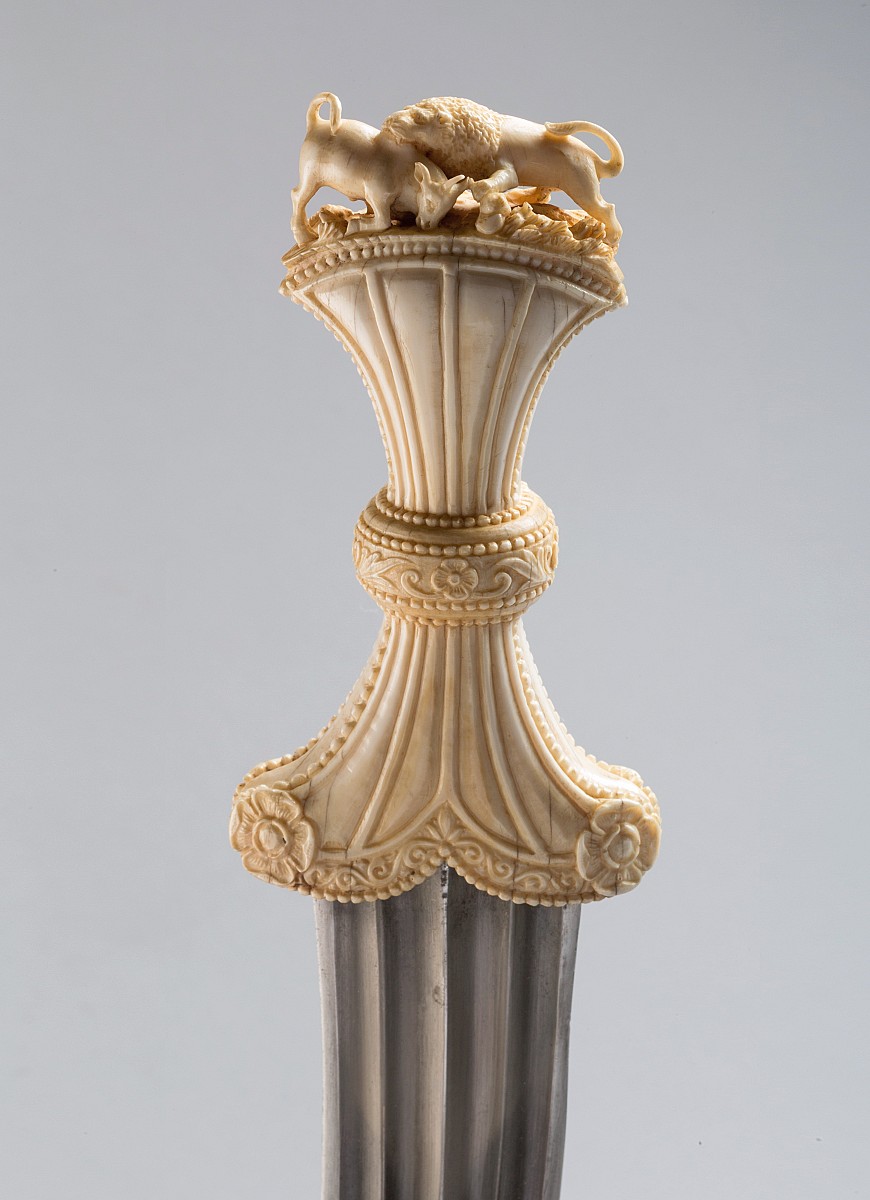
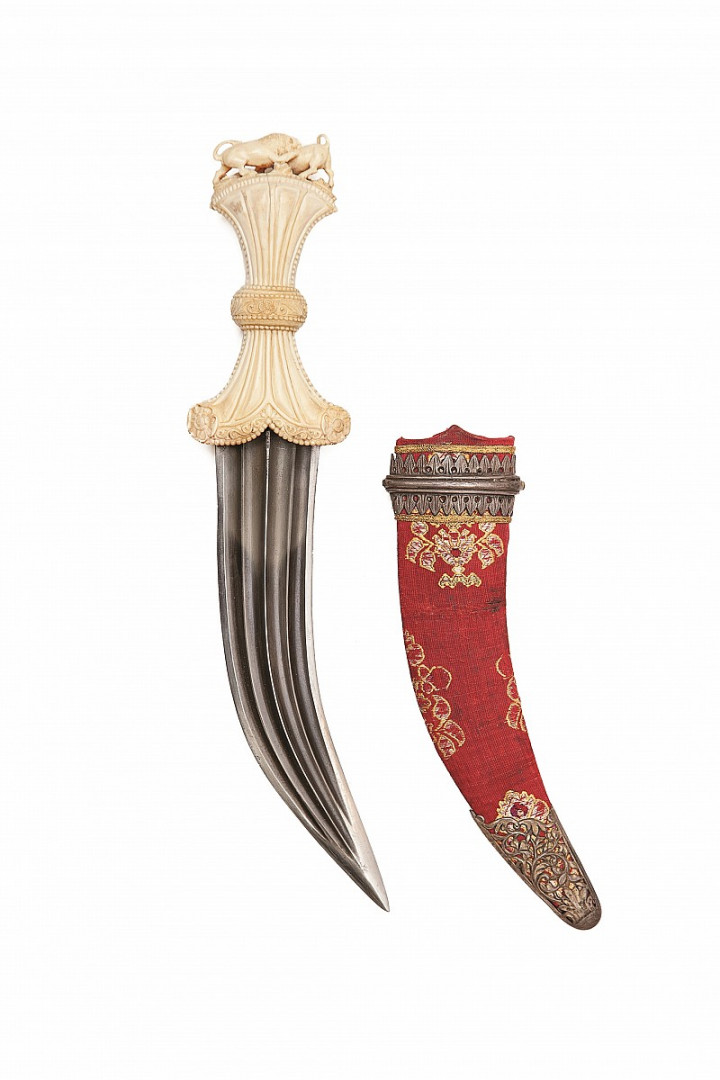
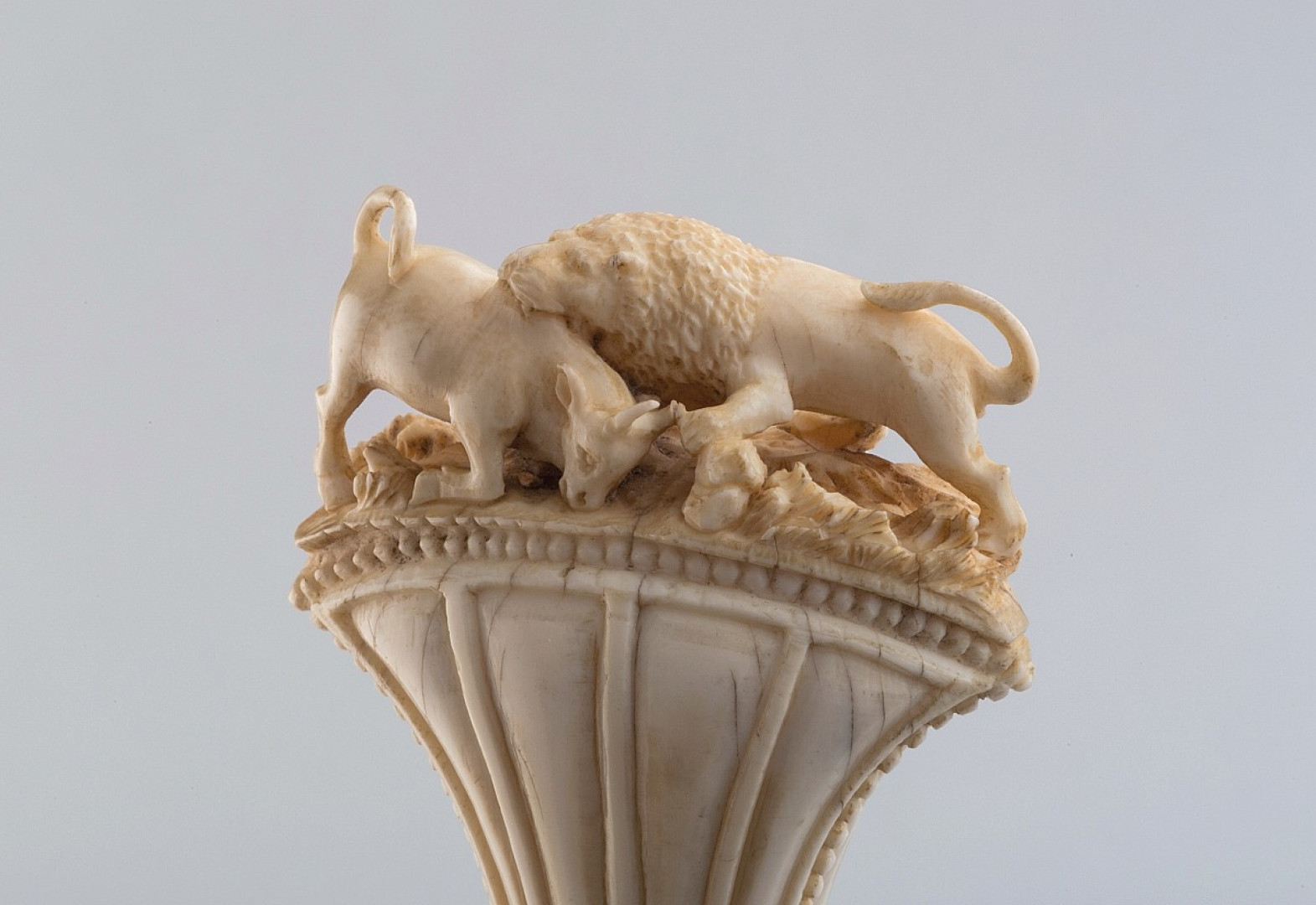
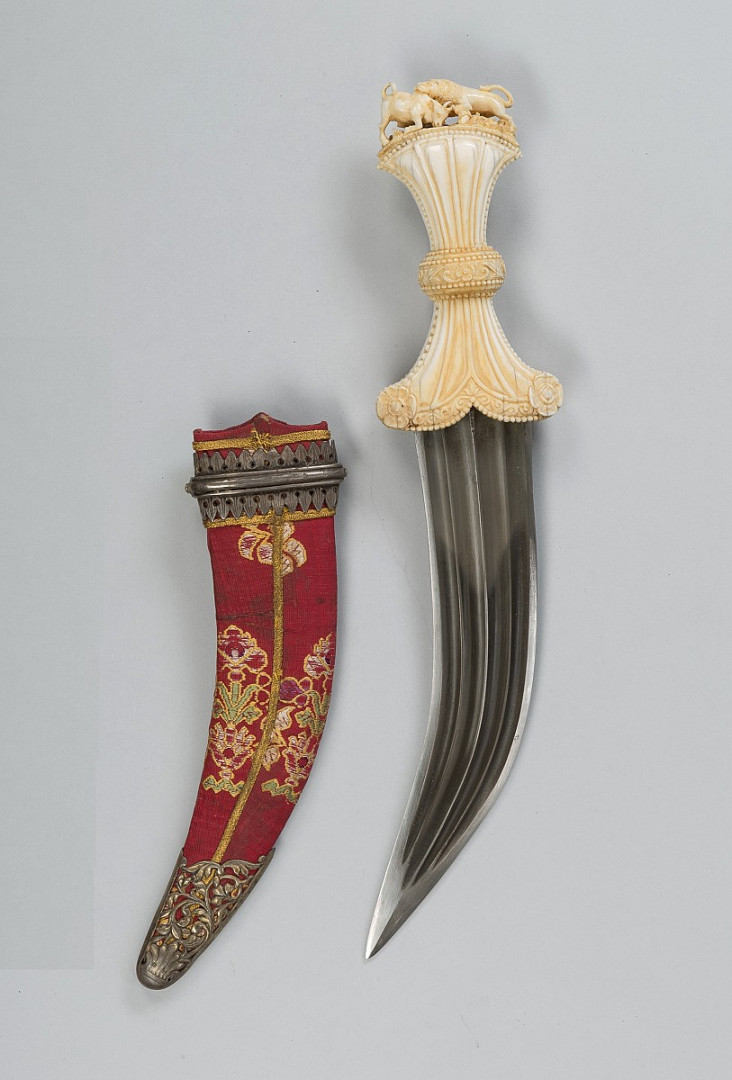
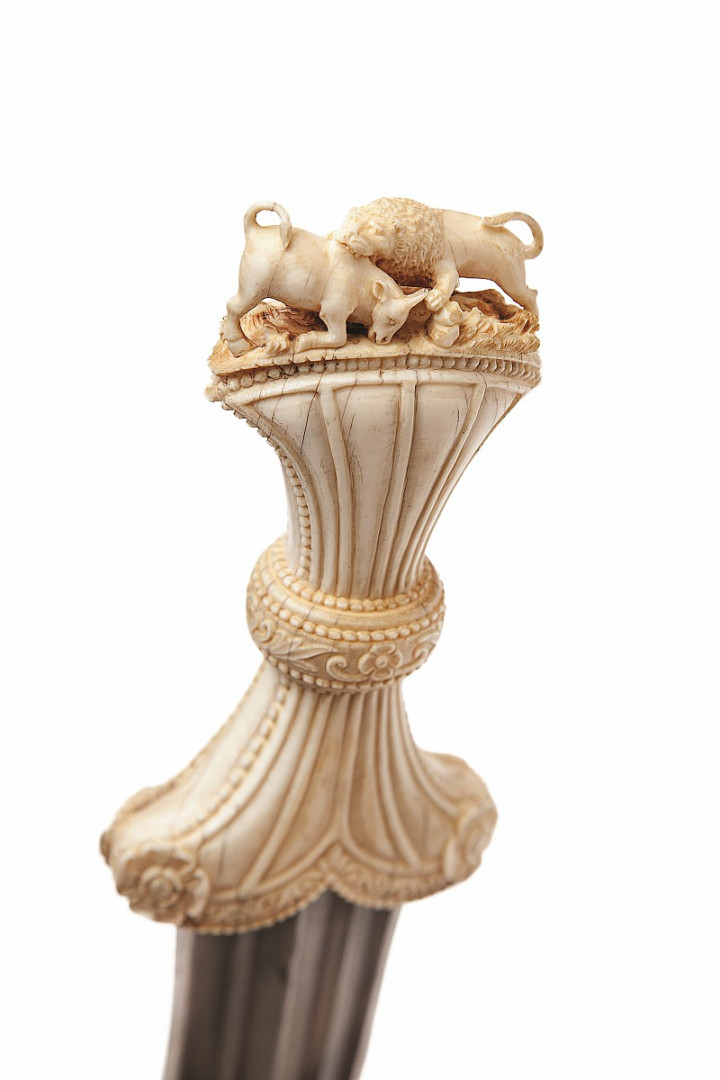
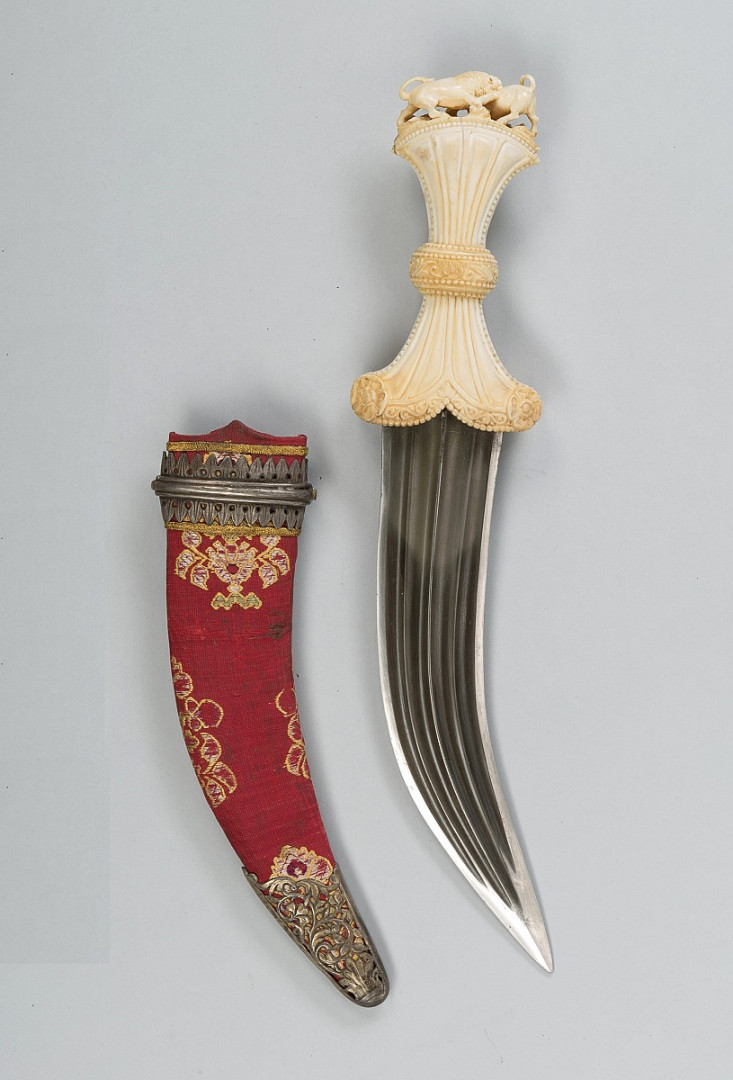
The curved, double-edged blade is made of plain steel with a reinforced tip and four deep fullers on each side. The one-piece waisted hilt is carved with a central spherical knop, scroll quillons and relief decoration comprising smooth ribs, beaded borders, four-petaled flower heads and bands of scrolls. The pommel is a three-dimensional battle scene between a lion and a bull portrayed in a naturalistic manner. The wooden scabbard is covered with red silk fabric embroidered with gold and silver threads. The silver scabbard mounts are pierced with vegetal motifs.
COMMENT. Jambiya is the traditional Arab dagger with a waisted hilt and a relatively short but broad, curved, double-edged blade, which generally has a raised central rib on each side. The shapes of the pommel and scabbard vary depending on local traditions. The word "jambiya" derives from the Arabic jamb / janb meaning "side", although the dagger is traditionally worn in a scabbard attached to a belt or tucked into a belt in front of the body. The alternative spelling is janbiya, as well as janbiyya or janbia. The term "jambiya / janbiya" is most commonly used in the western parts of the Arabian Peninsula, mainly Yemen and Western Saudi Arabia, whereas in eastern parts of the Arabian Peninsula including Oman, the United Arab Emirates, as well as some areas of Saudi Arabia (Al-Hasa) and Yemen (Hadhramaut), this dagger type is referred to as khanjar. In addition, the term "jambiya / janbiya" is common in India, where the Arab dagger came with merchants and mercenaries from Hadhramaut. Both the Arab style jambiya and its local variations were popular here.
The presented dagger is a vivid example of mixing cultural traditions. The Arab jambiya was popular in parts of India especially in the Deccan and Gujarat, where it became known mainly due to Yemeni mercenaries. The shape of the Arab dagger was replicated in general features only, since numerous fullers on the blade, scroll quillons and central spherical knob on the hilt, as well as scabbard design correspond to the Indian traditions. The scabbard is covered with Indian brocade or kinkhab, and the silver mount was formerly part of the talwar scabbard. At the same time, beaded borders are more typical of the carved hilts of Iranian khanjars than of Indian daggers. In addition, the lion-bull combat motif is most closely associated with Iranian art and mythology, although the realistic interpretation and plastic expressiveness of the sculptural composition show the influence of European ivory carving tradition.
LITERATURE: 1) Hermann Historica München. 60. Auktion: Ausgesuchte Sammlungsstücke: Alte Waffen, Kunsthandwerk, Orden & Militärhistorische Objekte. Donnerstag, 14. Oktober 2010: [Auktionskatalog]. – München, 2010. – Los 2663; 2) Сиваченко Е. Сталь и Золото: Восточное оружие из собрания Feldman Family Museum = Steel and Gold: Eastern Weapons from the Feldman Family Museum Collection. – Киев, 2019. – С. 478-479, №193.